
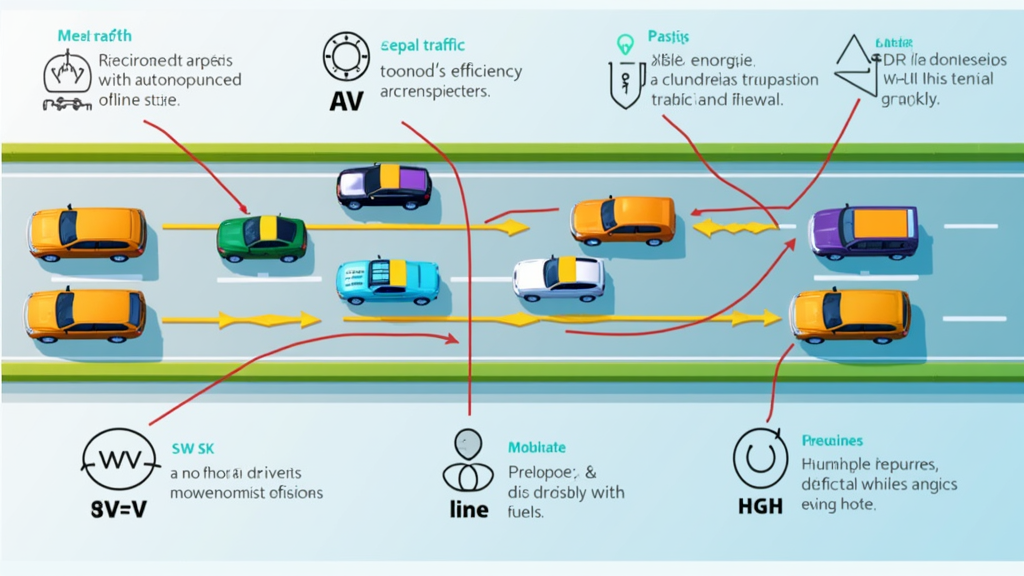
Reinforcement Learning Traffic Smoothing represents a groundbreaking approach to transforming how we experience congestion on our highways. By deploying intelligent algorithms in autonomous vehicles (AVs), we can dynamically adjust traffic flow, improving energy efficiency and reducing fuel consumption across the board. This innovative method targets frustrating “stop-and-go” waves commonly encountered during rush hour, offering a solution through reinforcement learning applications that adaptively smooth traffic conditions. As AV technology continues to evolve, the integration of these control systems could redefine AV traffic optimization, fostering a more efficient and environmentally friendly driving experience. Ultimately, the implications for energy-efficient driving are significant, promising a future where our roads are both safer and less polluted.
Traffic flow optimization through intelligent systems involves the strategic deployment of adaptive algorithms in self-driving cars. Utilizing advanced techniques in machine learning, these systems create pathways to alleviate congestion, thereby addressing the common challenge of fluctuating vehicle speeds that lead to bottlenecks on busy highways. The application of reinforcement learning plays a crucial role in enhancing the interaction between autonomous vehicles and human-driven cars, contributing to smoother travel experiences. By employing such dynamic solutions, the goal of achieving an energy-conscious driving environment becomes increasingly attainable. This approach to traffic management not only improves efficiency but also caters to the growing need for sustainable transport solutions.
Understanding the Impact of Phantom Jams in Traffic Flow
Phantom jams are a common yet frustrating occurrence on highways, characterized by sudden drops in speed that seem to emerge from nowhere. These slowdowns often occur without any clear external causes—no accidents, no construction, just drivers adjusting their speeds in response to one another. This behavior creates ripple effects throughout the traffic stream, resulting in significant congestion and wasted energy across all vehicles on the road. It’s a phenomenon that leads to not only increased travel times but also higher fuel consumption, making it a pressing issue for effective AV traffic optimization.
To mitigate the effects of phantom jams, it is essential to understand the underlying causes. Minor fluctuations in speed can escalate dramatically as vehicles respond to one another’s movements. For example, if a driver suddenly brakes, those behind might react slightly slower, causing a cascading effect that ultimately results in a complete stop further back. By implementing solutions such as reinforcement learning, which enables AVs to adapt their driving behaviors in real-time, we can smoothen these fluctuations and enhance the overall efficiency and safety of highway driving.
The Role of Reinforcement Learning in Smoothing Traffic Flow
Reinforcement learning (RL) has emerged as a transformative technology in the field of traffic management, particularly in smoothing traffic flow. Through ongoing interactions with their environment, RL-enabled AVs can learn optimized driving strategies that significantly reduce stop-and-go waves. By adjusting speed and maintaining optimal gaps between vehicles, these autonomous systems can mitigate the amplification of minor disturbances in traffic, leading to smoother acceleration and deceleration patterns. Thus, RL is a critical component in tackling the challenges posed by phantom jams and improving energy efficiency on the highways.
In our latest study, we deployed 100 RL-controlled vehicles on a busy highway to gather insights into their impact on traffic behavior. By simulating various real-time traffic conditions, we equipped these AVs with the ability to learn and adapt dynamically. This initiative not only demonstrated the viability of RL applications in real-world scenarios but also highlighted how smart AV traffic optimization can lead to fuel savings for all road users, proving that a small number of well-controlled vehicles can benefit even the most congested situations.
Energy-Efficient Driving Strategies for Autonomous Vehicles
As the transportation sector increasingly shifts toward autonomous vehicle technology, energy-efficient driving strategies have become paramount. Reinforcement learning plays a crucial role in training AVs to operate at their optimal energy consumption levels while safely navigating mixed traffic environments. By prioritizing smooth acceleration patterns and maintaining appropriate following distances, RL-equipped vehicles can significantly cut fuel consumption—not only for themselves but also for nearby conventional drivers who benefit from improved traffic flow.
Moreover, intelligent algorithms can adapt driving behaviors based on real-time traffic conditions, optimizing routes and minimizing unnecessary stops. This innovative approach to energy-efficient driving embraces the principle of ‘driving with the flow,’ which reduces the incidence of harsh braking and rapid acceleration—two significant contributors to increased fuel usage. Future advancements in RL and traffic data integration will further enhance these energy-saving strategies, making our highways cleaner and more efficient.
Challenges in Deploying Reinforcement Learning at Scale
While the promise of reinforcement learning for traffic smoothing is evident, deploying RL controllers at scale presents several challenges. A significant hurdle is ensuring the reliability and adaptability of these algorithms in real-world conditions, where human driver behavior can be unpredictable. During our 100-AV field test, the RL agents had to navigate through various driving scenarios without prior communication or coordination, highlighting the need for robust policies that can adapt to the dynamic nature of traffic.
Additionally, the design of effective reward functions that balance multiple objectives—such as wave smoothing, energy efficiency, safety, and adherence to conventional driving norms—adds complexity to RL applications. Each term’s coefficient in the reward function must be carefully calibrated to ensure that AVs promote the desired outcome without adopting counterproductive behaviors that may negatively impact the overall traffic ecosystem. As we continue to refine these models, collaboration between researchers and engineers will be crucial to overcoming these deployment challenges.
Simulation Results: The Efficacy of RL in Traffic Smoothing
Our simulations have indicated that the application of reinforcement learning significantly enhances traffic flow dynamics. In particular, RL-controlled AVs displayed a tendency to maintain larger gaps compared to human drivers, allowing them to effectively absorb fluctuations in traffic. The simulations projected fuel savings of up to 20% across all road users in the most congested scenarios, demonstrating the tangible benefits of integrating RL into traffic management solutions.
Moreover, these results underscore the potential for RL to diminish the frequency of phantom jams, ultimately leading to cleaner and more energy-efficient roadways. As we transition from simulations to real-world deployments, these insights provide a roadmap for future innovations in autonomous vehicle technology, making it imperative to continue investigating the interplay between AV behavior and broader traffic dynamics.
Future Directions in AV Traffic Optimization
The future of traffic optimization lies in harnessing the full capabilities of reinforcement learning and integrating it with advanced sensor technologies. As we have observed through our extensive research, equipping AVs with real-time traffic data and sophisticated algorithms that enable adaptive decision-making will play a crucial role in further improving traffic conditions. The ongoing evolution in autonomous vehicle technology holds the promise of not just smoothing traffic flow but also revolutionizing road safety and efficiency.
Furthermore, continued collaboration between researchers, policymakers, and the automotive industry will be essential in shaping standards and practices for deploying RL applications on a larger scale. Greater investment in infrastructure that supports communication between vehicles and centralized data systems can amplify the benefits of AV traffic smoothing strategies, ultimately leading to highways that consume less energy and produce fewer emissions for all drivers.
The Importance of Safety in AV Traffic Management
Safety remains a top priority as we explore the deployment of reinforcement learning in traffic smoothing applications. The integration of RL in AV systems must be accompanied by stringent safety protocols that ensure vehicles operate within safe following distances and respond predictably to erratic driving behaviors of human counterparts. Careful crafting of reward functions to incentivize safe driving practices while achieving energy efficiency is crucial to foster a harmonious coexistence between AVs and human drivers.
Additionally, comprehensive testing and validation processes are essential to guarantee that RL-controlled vehicles can safely adapt to a range of real-world driving circumstances. Through proactive measures, such as driver supervision during field tests and continuous monitoring of vehicle performance in mixed traffic scenarios, we can better ensure that autonomous vehicles contribute positively to road safety while simultaneously promoting congestion reduction and fuel savings.
Enhancing Human-AV Interaction for Better Traffic Outcomes
Effective human-AV interaction is vital for maximizing the benefits of reinforcement learning in traffic management. As AVs begin to share the road with human drivers, establishing intuitive communication between the two becomes crucial. This includes creating predictable driving behaviors in AVs that align with human driving norms, fostering an environment of mutual understanding and cooperation. Through reinforcement learning, AVs can learn to mimic safe driving cues that human drivers expect, which can lead to smoother traffic flow and enhanced safety for all road users.
Moreover, educating human drivers about the behaviors and intentions of AVs can lead to improved traffic dynamics. When drivers understand how AVs operate—such as their tendency to maintain larger gaps and smoother braking patterns—they may subconsciously adjust their own driving behaviors to reduce the likelihood of phantom jams. By bridging the communication gap between human and autonomous drivers, we can create a more cooperative traffic system that reaps the full benefits of RL-driven traffic smoothing solutions.
The Economic Implications of Reinforcement Learning in Traffic Systems
The adoption of reinforcement learning in traffic management has broad economic implications, particularly in terms of fuel savings and operational efficiency. By implementing RL-driven strategies that enhance traffic flow and reduce congestion, we can lower fuel consumption not only for autonomous vehicles but for all users on the road. This translates into significant cost savings for individual drivers and industries that rely on transportation, highlighting the potential financial benefits of investing in autonomous vehicle technologies.
Furthermore, smoother traffic flow achieved through RL applications can decrease wear and tear on vehicles, leading to lower maintenance costs over time. The economic advantages extend beyond the individual driver; cities and governments can benefit significantly from reduced congestion-related costs, including lower spending on infrastructure maintenance and emergency response services. Ultimately, the integration of RL into traffic management systems stands to offer substantial economic returns alongside its environmental benefits.
Frequently Asked Questions
What is reinforcement learning traffic smoothing and how does it improve AV traffic optimization?
Reinforcement learning traffic smoothing refers to the application of reinforcement learning (RL) techniques to enhance the flow of traffic by reducing stop-and-go waves. This approach optimizes the behavior of autonomous vehicles (AVs) to maintain smoother traffic flow, ultimately improving overall traffic optimization. By learning to respond effectively to changing traffic conditions, RL-controlled AVs can significantly mitigate congestion and enhance fuel efficiency.
How does reinforcement learning help in smoothing traffic flow for autonomous vehicles?
Reinforcement learning helps in smoothing traffic flow by allowing autonomous vehicles to learn optimal driving strategies through real-time interactions with their environment. RL agents are trained to minimize stop-and-go waves, enhance energy-efficient driving, and maintain safe distances from other vehicles. This adaptive learning process results in reduced fuel consumption and improved traffic conditions for all road users.
What are the benefits of using reinforcement learning applications in traffic management?
Reinforcement learning applications in traffic management offer several benefits, including the ability to dynamically adapt to real-time traffic conditions, reduce congestion caused by phantom jams, and optimize fuel efficiency. By deploying RL-controlled AVs, traffic flow can be smoothed, leading to a decrease in energy consumption, lower CO2 emissions, and a more pleasant driving experience for everyone.
What are the main challenges in deploying reinforcement learning controllers for traffic smoothing?
The main challenges in deploying reinforcement learning controllers for traffic smoothing include designing an effective reward function that balances multiple objectives like wave smoothing, energy efficiency, safety, and adherence to human driving norms. Additionally, transitioning from simulation to real-world deployment requires ensuring the controllers can operate robustly amid unpredictable human driver behavior without explicit communication.
Can reinforcement learning traffic smoothing reduce fuel consumption for human drivers as well?
Yes, reinforcement learning traffic smoothing can significantly reduce fuel consumption for human drivers. By optimizing the behavior of a small percentage of AVs on the road, the overall traffic flow is improved, leading to fewer stop-and-go scenarios that waste fuel. This creates a more energy-efficient driving environment, benefiting all vehicles irrespective of whether they are autonomous or not.
In what ways can AV technology utilize reinforcement learning for energy-efficient driving?
AV technology can utilize reinforcement learning for energy-efficient driving by training vehicles to maintain optimal following distances and manage speed according to traffic dynamics. By learning to anticipate and smooth out traffic fluctuations, RL-controlled AVs can minimize unnecessary accelerations and stops, thus enhancing fuel efficiency and reducing emissions for all road users.
What results were observed during the 100 AV field test for traffic smoothing?
During the 100 AV field test, significant improvements in traffic smoothing were observed, including up to 20% reductions in fuel consumption across all vehicles in congested scenarios. The RL-controlled AVs effectively maintained safer, larger gaps than human drivers, allowing them to absorb traffic slowdowns more effectively, which contributed to smoother traffic flow overall.
| Key Aspect | Details |
|---|---|
| Objective | Deploy 100 RL-controlled cars to smooth traffic congestion and reduce fuel consumption. |
| Issue Addressed | Stop-and-go waves in traffic that lead to congestion and energy waste. |
| RL Approach | Agents learn to maximize energy efficiency and maintain safety through interactions with traffic simulations. |
| Wave-Smoothing Mechanism | AVs adjust driving behavior in real-time to reduce stop-and-go oscillations, improving flow for all road users. |
| Simulation Results | Achieved up to 20% fuel savings across road users, with fewer than 5% autonomy on the road during testing. |
| Current Deployment | The MegaVanderTest deployed RL controllers on 100 cars, marking a significant step in mixed-autonomy traffic studies. |
| Challenges Encountered | Need for scalable simulations and an effective reward function that balances safety, comfort, and efficiency. |
Summary
Reinforcement Learning Traffic Smoothing presents a revolutionary approach to alleviating highway congestion through the deployment of 100 autonomous vehicles that leverage RL controllers. This groundbreaking experiment not only showcases the potential of RL in managing traffic flow and enhancing energy efficiency but also emphasizes the need for ongoing improvements in simulation accuracy and data integration. By minimizing stop-and-go waves and optimizing driving behaviors, we can significantly reduce fuel consumption and environmental impact for all road users.