
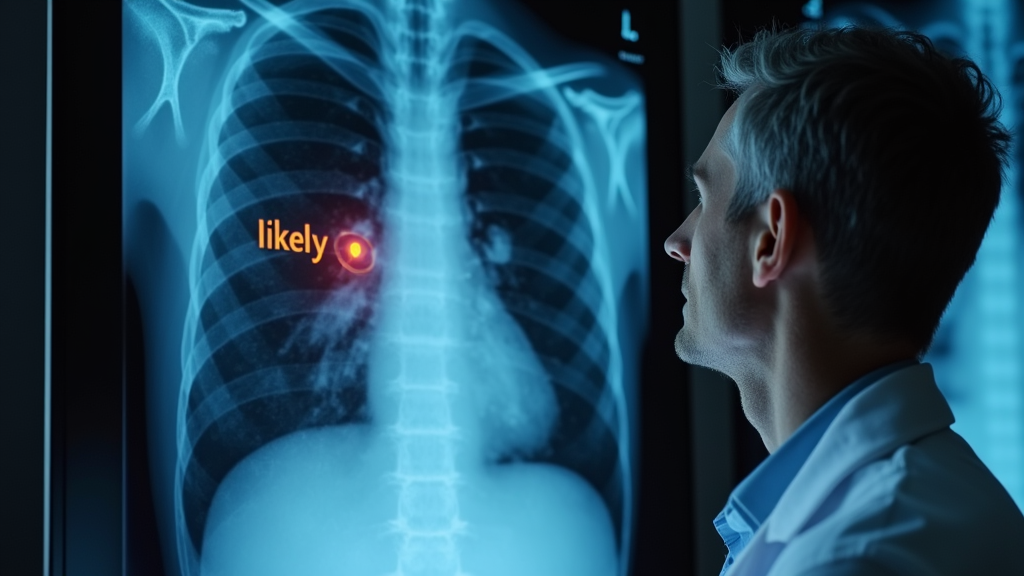
Radiologists’ diagnostic reporting serves as a critical bridge between medical imaging and effective clinical decision-making. This essential practice not only conveys the findings of X-rays and other imaging modalities but also reflects the level of certainty regarding the presence of various conditions. With advancements in medical imaging accuracy, the language used in radiology reports has come under scrutiny, prompting researchers to explore how radiology terminology impacts diagnostic certainty. A new framework seeks to improve these reports by helping radiologists choose precise phrases that accurately represent the likelihood of conditions, ultimately enhancing clinical reporting. By elevating the reliability of these diagnostic communications, healthcare providers can make more informed decisions, ensuring optimal patient care.
The art of diagnostic communication in radiology encompasses the careful reporting of results from various imaging techniques, such as ultrasound and MRI. Within this realm, clarity and precision are paramount, as the terminology used by radiologists directly influences clinical management decisions. Innovations to enhance the reliability of these radiology reports focus on refining the language associated with diagnostic certainty, ensuring that medical professionals possess the necessary information to act decisively. This pursuit of accuracy in clinical reporting is further supported by research that evaluates how descriptions like “likely” or “possible” inform a clinician’s next steps. By employing refined methods of expression, radiologists can significantly affect treatment outcomes for patients.
Improving Radiologists’ Diagnostic Reporting Accuracy
In the realm of medical imaging, accurate communication is essential for effective patient care. The newly developed framework for radiologists’ diagnostic reporting aims to refine how certainty is expressed in clinical documentation. This is particularly important as vague qualifiers like ‘likely’ or ‘may’ can lead to varying interpretations of a patient’s condition, impacting treatment decisions. By utilizing this method, radiologists can align their terminology more closely with established probability distributions, enhancing the overall reliability of the reports.
The implications of improved diagnostic reporting extend beyond radiologists, influencing the entire healthcare ecosystem. When doctors act on more precise language regarding possible pathologies, the likelihood of appropriate intervention increases. For instance, if an X-ray report states pneumonia is ‘consistent with’ certain findings rather than ‘possibly,’ it aids in immediate decision-making, which could be critical for patient outcomes. Therefore, enhancing radiologists’ language serves as a foundational step in improving medical imaging accuracy.
Decoding the Language of Diagnostics in Radiology
Understanding the nuances of radiology terminology is pivotal for diagnostic certainty. The study underlines the distinction between ambiguous terms that radiologists frequently employ. By investigating the way phrases impact diagnostic performance, the researchers found that certain expressions, such as ‘may represent,’ inherently introduce a larger scope of uncertainty. Radiologists can benefit from a focused approach to language, aligning their expressions with statistical outcomes to ensure they reflect the actual clinical picture.
This alignment allows practitioners to grasp the level of certainty conveyed in reports, which is crucial for making informed decisions about patient care. For example, radiologists expressing a condition as ‘unlikely to be present’ can steer clinicians away from unnecessary interventions, highlighting the need for calibrating confidence levels with accuracy in reporting. By refining their wording, radiologists not only enhance diagnostic certainty but also contribute to a more cohesive clinical environment.
The Role of Language in Clinical Decision-Making
The choice of words in radiology reports plays a critical role in shaping clinical decision-making. When radiologists provide reports reflecting a high degree of confidence, it can prompt immediate action from referring physicians, often without additional testing. However, incorrect confidence levels can lead to mismanagement of patient care, demonstrating the need for standardized terminology that conveys appropriate diagnostic certainty. Leveraging the research’s insights, radiologists can adopt more effective language strategies that directly correlate with clinical outcomes.
Moreover, effective communication fosters collaborative decision-making among healthcare providers. For instance, if a radiologist states that a condition is ‘highly probable,’ it allows physicians to quickly determine appropriate timelines for treatment versus additional diagnostics. This synergy leads to improved patient satisfaction and trust in the healthcare system. Therefore, establishing a framework for precise reporting not only enhances diagnostic accuracy but also strengthens the overall communication culture in healthcare.
Leveraging Clinical Data for Enhanced Reporting
Utilizing clinical data analytics, the new framework is tailored to enhance the reliability of radiological reports. By analyzing historical data and feedback from clinicians, the researchers established a calibration model that provides concrete suggestions for the use of certainty phrases. This model aids radiologists in articulating their diagnostic confidence more accurately, ultimately leading to improved patient outcomes. The transition from vague terminology to data-driven language supports a paradigm shift toward evidence-based practices in radiology.
Furthermore, this innovative approach not only enhances individual reports but also contributes to broader clinical insights. As radiologists adopt more precise language aligned with statistical realities, the cumulative effect amidst healthcare providers can lead to enhanced discourse around treatment efficacy and patient management strategies. The framework’s integration into routine practice may set new standards in diagnostic reporting, emphasizing the responsible use of medical imaging.
Challenges of Expression and Interpretation in Radiology
Radiology often grapples with the challenge of expressing diagnostic certainty amidst inherent uncertainties in imaging. Phrases such as ‘probably’ or ‘possibly’ leave room for interpretation, leading to potential miscommunication in patient management. In light of the new framework, these challenges can be addressed by clarifying how radiologists can express varying levels of certainty with higher fidelity. By consistently applying refined terms, radiologists can improve the interpretability of their findings and subsequently guide clinical actions.
Another critical aspect is the education of both radiologists and referring physicians on the implications of these terms. Training sessions on the significance of diagnostic language and its influence on treatment pathways will be instrumental. Ultimately, cultivating an awareness of how language shapes clinical practice can foster better communication and elevate the standards of patient care in radiology.
Automatic Calibration of Language Models in Radiology
The integration of artificial intelligence in radiology is on the rise, and with it comes the potential for automating the calibration of language used in diagnostic reporting. The innovative study explores how AI can analyze the confidence levels of language models in relation to diagnostic accuracy. Harnessing algorithmic approaches allows for the creation of language models that can automatically suggest terminologies, supporting radiologists in making informed linguistic choices that enhance their reporting reliability.
By utilizing this technology, radiologists can adopt AI-assisted recommendations that reflect the predictive accuracy of their assessments. This not only streamlines the reporting process but also lays the groundwork for ongoing improvement in medical imaging accuracy. In future applications, these AI-driven tools may revolutionize how radiological interpretations are communicated, leading to even higher levels of confidence in diagnostic certainty.
Future Directions in Radiology Reporting
As the field of radiology continues to evolve, future research and collaborations will be vital in expanding the impact of enhanced reporting methods. Ongoing studies are expected to incorporate additional imaging modalities, such as abdominal CT scans, which will diversify the applicability of the framework. Furthermore, examining the receptiveness of radiologists to calibration-improving suggestions will be critical in ensuring the widespread adoption of these innovations in clinical practice.
The potential benefits of advancing radiology reporting are vast, as the expression of diagnostic certainty influences management decisions at several levels. With clinicians increasingly aware of the impact their language can have on patient outcomes, the focus on precise communication is set to become a standard in radiology. Continued funding and interdisciplinary collaboration will pave the way for more groundbreaking research that can further enhance the accuracy and reliability of clinical reporting.
The Importance of Precision in Medical Imaging Terms
In the arena of medical imaging, the specifics of language can dramatically alter patient outcomes. The study emphasizes that precise terminology is crucial for the interpretation of diagnostic findings, with terms like ‘consistent with’ and ‘may represent’ necessitating careful consideration. Enhanced precision helps to manage the often ambiguous nature of X-ray findings, leading to better-informed treatment plans. This precision in radiology terminology ultimately benefits patient safety and healthcare efficiency.
As healthcare professionals strive for excellence in patient communication, the focus must remain on the implications of term choices used in diagnostic reports. There is a growing recognition of the responsibility practitioners have to ensure that language reflects diagnostic certainty, with proactive efforts needed to standardize terminology across the field. Radiologists equipped with this knowledge will contribute to better clinical collaboration and a more informed patient care process.
Patient-Centric Approaches in Radiology Reporting
Adopting a patient-centric approach to radiology reporting is increasingly recognized as paramount. The reliance on clear, confident language enhances not just clinical decisions but also the patient experience. Radiologists play a crucial role in ensuring that reports are not only scientifically sound but also comprehensible to patients and physicians alike. By prioritizing terminology that resonates with patients’ understanding of their conditions, radiologists foster greater engagement and trust.
Moreover, clear communication in radiology reports is instrumental in curtailing patient anxiety levels post-diagnosis. By employing a framework that enhances the clarity and accuracy of expressed certainty regarding medical findings, radiologists can ensure patients are properly informed about their conditions without unnecessary distress. This patient-first methodology enriches the healthcare narrative and exemplifies the importance of effective communication in fostering positive health outcomes.
Frequently Asked Questions
How does the new framework improve radiologists’ diagnostic reporting?
The new framework enhances radiologists’ diagnostic reporting by offering clear suggestions for terminology that accurately reflects the likelihood of certain conditions being present in medical imaging, such as X-rays. This leads to more reliable clinical reporting and better-calibrated expressions of diagnostic certainty.
Why is accurate radiologists’ diagnostic reporting important for patient care?
Accurate radiologists’ diagnostic reporting is crucial because the terms radiologists use influence clinical decisions significantly. Clear and reliable reports ensure that doctors have the right information to make timely interventions, ultimately benefiting patient outcomes.
What role does medical imaging accuracy play in radiologists’ diagnostic reporting?
Medical imaging accuracy directly impacts radiologists’ diagnostic reporting by providing the foundation upon which radiologists assess and communicate their findings. Enhanced imaging techniques improve the diagnostic confidence and precision in interpreting results, aligning with the framework for reliable clinical reporting.
How can radiology terminology affect diagnostic certainty?
Radiology terminology is vital in establishing diagnostic certainty, as the words radiologists choose can either convey confidence or uncertainty about the presence of a condition. The framework helps standardize this terminology to improve the accuracy of communicated diagnostic assessments.
What improvements can be expected in radiology reports with this new method?
By utilizing this method, improvements in radiology reports include enhanced clarity and reliability, as radiologists will adopt more precise language that mirrors true probabilities of pathologies. This will lead to improved patient management based on better-informed clinical decisions.
How does the new method assess and calibrate radiologists’ language in diagnostic reports?
The new method assesses and calibrates radiologists’ language by analyzing probability distributions for various certainty phrases used in reports. This calibration ensures that the confidence reflected in their language aligns more closely with actual diagnostic likelihoods.
What impact does this research have on improving radiology reports overall?
This research impacts the improvement of radiology reports overall by establishing a reliable framework that encourages precise language usage among radiologists, thus reducing misinterpretations and enhancing diagnostic certainty in clinical decisions.
How can radiologists get training on the improved diagnostic reporting framework?
Radiologists can seek training on the improved diagnostic reporting framework through workshops, collaborations with researchers involved in this study, and continuing medical education programs that focus on best practices in clinical reporting and diagnostic certainty.
| Key Points |
|---|
| A new framework improves the reliability of radiologists’ diagnostic reports by helping them choose more accurate certainty phrases for X-ray findings. |
| Existing ambiguities in medical imaging terminology lead to overconfidence or underconfidence in radiologists’ assessments. Researchers aim to quantify and improve this. |
| Collaboration between MIT and Harvard Medical School underscores the importance of aligning language used in clinical settings with actual diagnostic probabilities. |
| The research includes measuring how well radiologists’ language reflects the actual prevalence of conditions like pneumonia based on their reports. |
| Future research will expand to include other imaging modalities and assess the receptiveness of radiologists to adopting more calibrated language. |
Summary
Radiologists’ diagnostic reporting plays a critical role in medical decision-making, and this new study demonstrates how improving the language used by radiologists can significantly enhance the reliability of their reports. By establishing a framework that quantifies the ambiguity of terms like “likely” and “possible,” the research fosters better communication and understanding in clinical contexts. As a result, both physicians and patients benefit from clearer insights leading to more accurate diagnoses and treatments.