
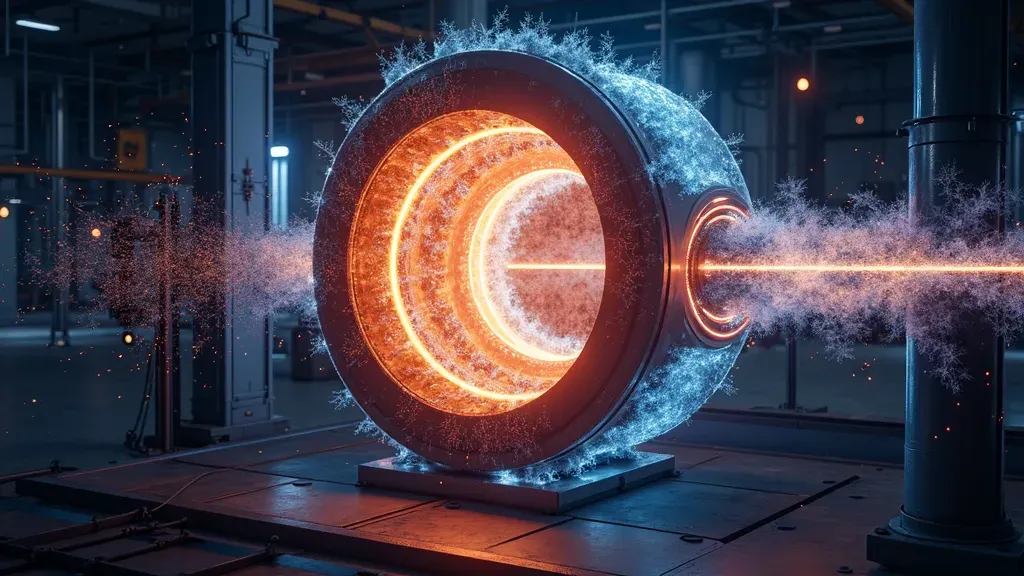
AI in fusion energy represents a groundbreaking fusion of advanced technology and sustainable energy innovations. As the world grapples with the pressing need for clean energy solutions, harnessing the power of artificial intelligence in fusion energy technology offers exciting possibilities. The intricate processes involved within a tokamak machine, where ionized gas or plasma is manipulated at extreme temperatures, can significantly benefit from AI-driven improvements in plasma control systems. By optimizing these systems, researchers are not only aiming to stabilize plasma but also to maximize energy output—potentially leading us to achieve net fusion energy for the first time. This endeavor has the potential to revolutionize the way we think about energy production, steering us toward a future powered by clean, limitless fusion energy.
The integration of artificial intelligence into the realm of fusion power presents an innovative approach to addressing our energy challenges. This application of smart technology in fusion-centric systems can enhance the efficiency and stability of the plasma processes fundamental to harnessing energy from nuclear fusion. As researchers explore how AI can facilitate real-time monitoring and optimization of fusion reactors, the potential for breakthroughs becomes increasingly evident. By revolutionizing our understanding and management of fusion energy dynamics, this fusion of AI and sustainable energy technologies could pave the way for a new era of energy independence and environmental responsibility.
The Promise of Fusion Energy Technology
Fusion energy technology represents one of the most exciting breakthroughs in the quest for sustainable power. Unlike conventional energy sources, fusion has the potential to deliver clean and unlimited energy without the long-lived radioactive waste associated with fission reactors. As researchers push the boundaries of what’s possible, the dream of harnessing the same process that powers the sun is becoming more achievable. Fusion energy works by fusing atomic nuclei, creating energy in the process, which, if perfected, could provide a carbon-free energy solution for generations to come.
The advancements in fusion energy technology are supported by significant investments and innovative partnerships, like the collaboration between AI companies and premier research facilities. This fusion partnership plays a crucial role in developing efficient reactors, such as the tokamak machine SPARC, designed to reach breakeven — the point where a fusion reactor produces more energy than it consumes. With ongoing research and development, fusion energy technology could not only reshape the energy landscape but also contribute towards combatting climate change.
AI in Fusion Energy: A Revolutionary Approach
Integrating AI in fusion energy research is revolutionizing how scientists approach plasma control systems. Artificial Intelligence enhances the ability to manage the extreme conditions found within a tokamak, including temperatures exceeding 100 million degrees Celsius. The use of machine learning algorithms such as deep reinforcement learning allows for greater precision in controlling plasma behavior, which is vital for efficient energy production. This partnership promises improvements in real-time diagnostics and control, potentially accelerating the timeline for viable fusion power.
AI’s capabilities in optimizing fusion energy processes are becoming apparent in simulations and real-world applications. Through advanced plasma simulators like TORAX, researchers can experiment with various operational strategies, simulating millions of scenarios before physically running the reactor. This not only saves time but also increases the likelihood of achieving optimal results in fusion experiments. By continually refining these AI models, we are moving closer to unleashing the full potential of fusion energy as a sustainable energy solution.
Simulating Fusion Plasma for Optimization
Creating accurate simulations of fusion plasma is fundamental to the success of tokamak operations. The process of simulating heat, electric current, and matter flow provides critical insights into how plasma interacts within the reactor environment. The introduction of sophisticated platforms like TORAX enables researchers to perform extensive virtual experiments that inform real-world operational decisions. These simulations help to visualize and predict plasma behavior, thus streamlining the time-consuming process of preparing for physical experiments.
Moreover, these fusion plasma simulations allow for the optimization of various parameters, increasing efficiency and safety in operation. By understanding how factors such as magnetic field strength and temperature fluctuations influence plasma stability, researchers can implement corrective measures before any significant energy runs take place. The use of AI to enhance plasma simulation capabilities marks a significant step forward in the journey to fully operational fusion energy plants, laying the groundwork for future advances in clean energy.
Maximizing Fusion Energy Output
One of the major challenges in fusion energy research is discovering the most effective methods for maximizing energy output from a tokamak. Various magnets and components need precise tuning to ensure that the fusion reaction remains stable while generating maximum power. Traditional methods of adjusting these parameters can be time-intensive and may not always yield the best results. Employing AI to strategize operating settings allows for rapid exploration of numerous scenarios, making it possible to find optimal operating conditions effectively.
AI-driven optimization techniques can evaluate a multitude of variables such as current through magnetic coils, fuel injection rates, and heating mechanisms in real-time. By utilizing advanced algorithms to sift through vast datasets and perform simulations, researchers can significantly reduce time spent setting up experiments. This proactive approach not only enhances operational efficiency but also maximizes the chances of achieving net energy gain from fusion reactions, paving the way for practical applications of fusion energy.
Real-Time Control Strategies Powered by AI
Effective management of fusion plasma requires real-time control strategies that can adapt to dynamic conditions within the reactor. An AI pilot using reinforcement learning can navigate the complexities of optimizing fusion performance while managing other parameters such as heat load. Such autonomy allows the tokamak to react quickly to unforeseen changes, ensuring that the plasma remains stable under varying operating conditions.
This innovative approach to dynamic control leverages algorithms capable of learning from past experiences and applying that knowledge to optimize future outcomes. By enabling rapid adjustments during operation, AI reduces risks associated with overheating and enhances the overall lifespan of reactor components. As research progresses, these real-time control capabilities will become integral to the success of future fusion reactors, contributing to a more efficient energy generation process.
Collaborating for a Sustainable Energy Future
The collaboration between AI developers and fusion energy innovators heralds a new era in clean energy solutions. Partnerships, like that of Google and Commonwealth Fusion Systems, signify an essential intersection of technology and science, channeling resources and expertise towards shared goals. Together, these teams are developing innovative tools to tackle longstanding challenges in energy production, placing fusion energy at the forefront of sustainable solutions.
As these partnerships evolve, the collective knowledge gained from joint ventures accelerates breakthroughs in fusion technology, potentially leading to its commercialization. With the combined forces of AI enhancements and advanced fusion research, the vision of a future powered by clean, limitless energy moves closer to reality, establishing a cleaner planet for future generations.
Enhancing Research with AI and Fusion Innovations
The integration of AI innovations into fusion research is streamlining processes and enhancing experimental outcomes. By utilizing AI models to control magnetic configurations, researchers can address complex dynamics within a tokamak more effectively than ever. These advancements in AI technologies provide insights that lead to improved designs and methodologies, driving the development of even safer and more efficient fusion energy systems.
Furthermore, focusing on sustainable energy innovations through AI not only benefits fusion research but also influences broader energy sectors. The software tools and algorithms developed for plasma control and simulation are paving the way for new applications across various renewable energy systems, showcasing the versatility of AI in addressing global energy challenges.
The Future of AI and Fusion Energy
As we look toward the future, the role of AI in fusion energy will only continue to grow. With each breakthrough in technology and collaboration, the process of making fusion a viable energy source becomes more tangible. The integration of intelligent systems designed to manage and optimize the behavior of plasma will ultimately revolutionize how we approach energy generation, shifting the paradigm towards sustainability.
The educational aspect of combining AI with fusion research is equally crucial. Historically, significant advancements in technology arise from interdisciplinary partnerships, encouraging knowledge sharing across diverse fields. This synergistic approach opens the door for a new generation of scientists and engineers, driven by a passion for energy innovation and commitment to a cleaner future.
Conclusion: The Path to Clean Fusion Energy
In conclusion, the journey towards clean and sustainable fusion energy is charged with exciting potential fueled by the collaboration of AI and fusion research efforts. Continued investment in innovative technologies and research partnerships will help unravel the complexities associated with harnessing fusion power. While many challenges still lie ahead, the framework being established today sets a promising foundation for achieving a revolutionary breakthrough in the energy industry.
As we continue to tackle global energy needs, the union of AI capabilities with fusion energy solutions highlights a compelling narrative of progress. With perseverance and technological advancements, the dream of efficient, clean energy from fusion might soon transition from aspiration to reality, heralding a new era of energy sustainability.
Frequently Asked Questions
How is AI being used in fusion energy technology?
AI is enhancing fusion energy technology by optimizing plasma control systems and supporting advancements in tokamak machines. Through deep reinforcement learning, AI helps stabilize complex plasma shapes, thus improving the efficiency of fusion power generation.
What role does reinforcement learning play in tokamak operations?
Reinforcement learning is crucial in tokamak operations as it enables real-time control of plasma configurations, allowing for rapid adjustments that maximize fusion energy output while ensuring safety within operational limits.
Can AI improve the simulation of fusion plasma?
Yes, AI can significantly enhance fusion plasma simulation. The TORAX simulator, for example, utilizes AI models to perform millions of virtual experiments, optimizing the conditions under which fusion can occur effectively before the tokamak is operational.
What advancements in clean energy solutions are driven by AI in fusion energy?
AI-driven clean energy solutions in fusion energy include the optimization of operating parameters in tokamak machines and the development of adaptive control strategies that improve energy generation and sustainability.
How does the collaboration with Commonwealth Fusion Systems utilize AI in fusion energy?
The collaboration with Commonwealth Fusion Systems leverages AI to accelerate the path to achieving net fusion energy in the SPARC tokamak, focusing on efficient plasma control systems and predictive simulations to optimize performance.
What is the significance of the SPARC tokamak in fusion energy technology?
SPARC is significant as it aims to be the first tokamak machine to generate net fusion energy, showcasing the potential of fusion energy technology combined with AI to deliver clean and limitless energy.
How can AI help achieve maximum energy output in fusion reactors?
AI can help achieve maximum energy output in fusion reactors like SPARC by fine-tuning parameters through advanced algorithms, which explore a vast range of operational scenarios to identify the most effective settings for energy generation.
What are the future implications of combining AI with fusion energy innovations?
Combining AI with fusion energy innovations may revolutionize energy production by creating adaptive systems for real-time control, enhancing efficiency, and ultimately driving the commercialization of sustainable fusion energy solutions.
Why is plasma stability critical in fusion energy technology?
Plasma stability is critical in fusion energy technology because maintaining stable plasma at extremely high temperatures is necessary to sustain fusion reactions effectively while minimizing energy loss and operational risks.
How does TORAX contribute to the advancement of fusion energy research?
TORAX contributes to fusion energy research by providing a sophisticated plasma simulator that integrates AI to test various operational strategies, thus saving time and resources in developing effective fusion energy systems.
| Key Area | Description |
|---|---|
| Partnership with CFS | Collaboration with Commonwealth Fusion Systems to develop fusion energy solutions. |
| SPARC Machine | A tokamak design that aims to achieve net fusion energy, leveraging high-temperature superconducting magnets. |
| AI in Plasma Control | Using AI and deep reinforcement learning to stabilize and optimize plasma configurations. |
| TORAX Simulator | An open-source plasma simulator developed for optimizing tokamak operations. |
| Maximizing Energy Efficiency | Leveraging AI to explore optimal operational settings for maximum fusion energy output. |
| Real-Time Control Strategies | Developing AI systems for adaptive control of SPARC’s operations. |
Summary
AI in Fusion Energy is revolutionizing how we approach the quest for clean and sustainable energy solutions. By collaborating with Commonwealth Fusion Systems and leveraging advanced artificial intelligence techniques, we are accelerating the development of fusion energy that promises to be safe, limitless, and environmentally friendly. The use of AI in simulating plasma behavior and optimizing tokamak operations, as demonstrated with the TORAX simulator, showcases the potential of technology to not only enhance research capabilities but also to bring us closer to realizing fusion energy’s long-awaited promise. The integration of AI in fusion setups like SPARC marks a significant step toward achieving operational efficiency and energy breakthroughs that could lead to cleaner energy for the future.