
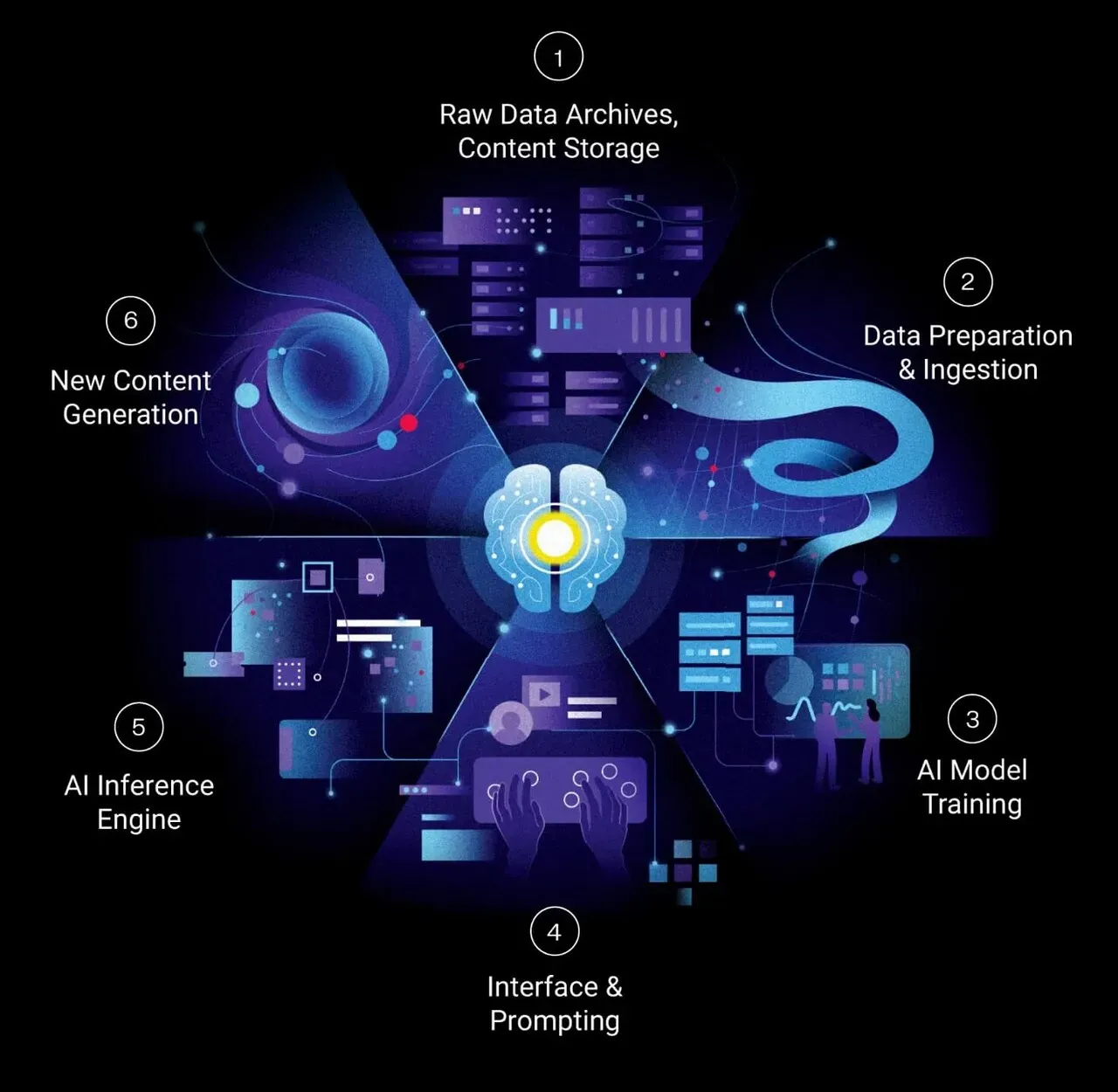
AI Data Storage Solutions are at the forefront of revolutionizing how businesses handle vast amounts of data in the age of artificial intelligence. As AI technologies proliferate, the need for robust cloud storage for AI becomes increasingly vital, addressing the challenges posed by traditional data management systems. These solutions offer scalable data management, facilitating efficient handling of data requests and ensuring smooth integration with advanced computing systems. With innovations like object storage for AI and enhancements in parallel computing storage, organizations are now capable of processing real-time data flows at impressive speeds. By leveraging partnerships with technology leaders like NVIDIA, the efficiency and performance of AI Data Storage Solutions are set to redefine operational standards across industries.
In the rapidly evolving landscape of data management, artificial intelligence solutions for data retention and access are gaining significant traction. These advanced data management systems are essential for businesses looking to optimize their storage capabilities while also enhancing computing efficiency. By implementing scalable storage architectures and leveraging cutting-edge technologies, organizations can meet the increasing demands posed by AI applications. Modern strategies, including optimized object storage and enhanced computational resources, enable seamless interactions between storage infrastructures and processing units. As businesses navigate this transformation, the reliance on innovative data storage strategies underscores a critical shift towards a future that prioritizes speed and efficiency in data handling.
The Evolution of AI Data Storage Solutions
In today’s fast-paced technological landscape, AI is increasingly reliant on advanced data storage solutions that can keep pace with its demands. Traditional storage systems often fall short when faced with the vast amounts of data generated by AI algorithms. As businesses turn to AI for insights and automation, the need for scalable and efficient data management becomes paramount. AI data storage solutions must accommodate not just the volume of data, but also the speed at which this data can be accessed and processed to drive real-time decision-making.
Key innovations in AI storage solutions include distributed architectures that leverage cloud technologies to enable scalability and flexibility. By utilizing cloud storage for AI, organizations can easily expand their storage capacity as data needs grow. Modern data storage architectures, such as object storage for AI, allow for efficient management of unstructured data, making it easier for AI applications to retrieve and utilize information swiftly—crucial for maintaining the speed and efficiency that AI systems require.
Implementing Scalable Data Management Strategies
Effective data management in the age of AI requires organizations to adopt scalable strategies that not only support current data needs but also anticipate future growth. Scalable data management solutions facilitate the handling of large datasets that AI applications rely on, ensuring that businesses are well-equipped to adapt to changing demands. Utilizing parallel computing storage methods allows multiple processes to access data simultaneously, which is essential for maximizing AI performance and ensuring low latency in data retrieval.
Moreover, implementing solutions like vector databases is crucial for enhancing AI capabilities. These databases improve data accessibility, enabling AI models to perform real-time computations more efficiently. By focusing on scalable approaches, companies can streamline their data operations, reduce downtime, and ultimately improve their AI system’s responsiveness. This strategic focus on scalable data management not only boosts performance but also significantly lowers operational costs related to data processing.
The Role of Object Storage for AI in Data Efficiency
Object storage for AI plays a vital role in optimizing data efficiency by offering a way to store vast amounts of unstructured data affordably and reliably. This type of storage enables organizations to easily manage and retrieve large datasets, which is essential for AI operations that require quick access to information. The architecture of object storage allows data to be organized in a flat namespace, streamlining data retrieval processes and minimizing bottlenecks that can hinder AI performance.
Additionally, integrations with modern AI frameworks enhance the functionality of object storage systems. By partnering with leading technology firms like NVIDIA, companies are able to leverage accelerated data processing capabilities, allowing for faster access and processing times. Such collaborations exemplify the potential of object storage to transform how organizations handle data in AI applications, providing them with the tools needed to support high-performance computing and robust data analysis.
Parallel Computing Storage: The Backbone of AI Performance
Parallel computing storage is emerging as a crucial element in supporting the performance of AI systems by enabling simultaneous data processing across multiple processors. This approach significantly boosts the computational efficiency as AI workloads increase in complexity and data volume. In an era where AI applications demand real-time analysis and rapid decision-making, parallel computing storage allows organizations to take full advantage of their data without experiencing delays caused by traditional serial processing methods.
As AI applications continue to evolve, the incorporation of robust parallel computing storage solutions becomes increasingly important. Organizations must invest in infrastructure that can support distributed data management, facilitating real-time computations and enhancing AI’s capabilities. By doing so, businesses not only maximize their operational efficiency but also maintain a competitive edge in the rapidly advancing field of artificial intelligence.
NVIDIA Data Processing: Collaborating for Superior AI Results
Partnerships with industry leaders like NVIDIA are crucial for enhancing data processing capabilities in AI solutions. NVIDIA’s cutting-edge GPU technology enables organizations to process vast amounts of data at unprecedented speeds. These advancements are particularly beneficial for AI-driven applications that require high computational power, as they allow teams to run complex models and algorithms much faster than conventional hardware could achieve.
Moreover, the synergy between NVIDIA’s technology and scalable data storage solutions ensures that data flows smoothly between storage and computation layers. This integrated approach not only reduces latency but also optimizes resource utilization, empowering companies to harness the full potential of their data. By leveraging NVIDIA data processing capabilities, organizations can enhance their AI initiatives, leading to improved outcomes and more innovative solutions.
Future Trends in AI-Dominated Data Storage Solutions
As AI technology advances, we can expect to see innovative trends shaping the future of data storage solutions. Integration of machine learning into data management is on the rise, enabling systems to adapt and evolve based on usage patterns and data requirements. This shift towards intelligent storage will allow organizations to automatically optimize their data processes, ensuring that resources are allocated efficiently and effectively as AI workloads increase.
Additionally, the move to hybrid cloud environments will revolutionize how businesses approach data storage for AI. This approach combines the scalability of cloud storage with the performance capabilities of on-premises solutions, offering more flexibility and control over data management. Future data storage solutions will likely leverage these hybrid setups, allowing organizations to optimize their AI systems and respond rapidly to changing data needs.
The Importance of Real-Time Data Access in AI Applications
Real-time data access is critical for the success of AI applications, especially as businesses strive for continuous improvement and responsiveness. AI-driven insights depend on timely data retrieval and processing, enabling teams to make informed decisions swiftly. Solutions that facilitate instant access to data, such as those offered by advanced object storage systems, are imperative for maintaining the agility and accuracy that modern AI applications demand.
Furthermore, real-time data access improves the capabilities of AI models by allowing them to learn and adapt continuously. This capability is particularly vital in sectors like healthcare and finance, where data changes rapidly and decisions must be made promptly. By ensuring that data is readily accessible, organizations not only enhance their operational efficiency but also improve the accuracy and relevance of their AI-powered insights.
Optimizing Cost-Efficiency with Advanced Data Storage
Cost-efficiency is a major consideration for organizations implementing data storage solutions in the context of AI. By utilizing scalable storage models, businesses can minimize unnecessary expenditure on infrastructure while still maintaining the capacity to handle large datasets. This approach allows companies to invest in high-performance equipment, such as NVIDIA GPUs, that can yield substantial returns on investment through improved processing capabilities.
Moreover, advancements in cloud technologies are reducing the overall cost of data management. Cloud storage for AI can be significantly more economical than traditional on-premises systems, providing flexible pricing models that adapt to fluctuating data needs. By prioritizing cost-efficient strategies in data storage, organizations can ensure they allocate resources effectively, paving the way for long-term sustainability in their AI initiatives.
Localized Data Processing and Its Impact on AI Strategies
Localized data processing is gaining traction as organizations seek to enhance the performance of their AI applications by reducing data latency and improving response times. By processing data closer to its source rather than relying on centralized storage systems, organizations can achieve faster analytics and decision-making. This strategy is particularly beneficial for AI applications that rely on real-time data inputs, such as autonomous vehicles or smart city technologies.
Additionally, localized data processing reduces bandwidth usage and enhances security, as sensitive data can be processed in compliance with regulatory requirements. By implementing solutions that support localized data processing, businesses can optimize their AI strategies, ensuring systems are more responsive and aligned with organizational goals. This trend will likely define the future of AI data management and storage, as speed and security become increasingly critical components.
Frequently Asked Questions
What are the benefits of using cloud storage for AI applications?
Cloud storage for AI applications offers scalability, allowing organizations to store vast amounts of data efficiently. It facilitates easy access to large datasets required for AI training and model development, which is crucial for enhancing performance. Cloud storage can also reduce latency and improve collaboration among teams working on AI projects, ensuring that data is readily available when needed.
How does scalable data management improve AI data storage solutions?
Scalable data management enhances AI data storage solutions by allowing businesses to adjust their storage capacity based on evolving data needs. This capability ensures that organizations can handle the large volumes of data generated by AI applications without compromising performance. It supports dynamic allocation of resources which is essential for maintaining high-speed data processing and accessibility in AI tasks.
What role does object storage for AI play in managing large datasets?
Object storage for AI is crucial for managing large datasets due to its ability to handle unstructured data efficiently. This type of storage organizes data into objects, making it easy to retrieve and analyze diverse forms of data such as images, videos, and text, which are common in AI applications. Furthermore, it scales seamlessly, accommodating the growing data demands of AI systems while enhancing data retrieval speeds.
Why is parallel computing storage important for artificial intelligence?
Parallel computing storage is vital for artificial intelligence because it allows multiple data processes to occur simultaneously, significantly improving processing speed and efficiency. This approach is necessary for AI applications that require real-time data access and analysis. By utilizing parallel computing storage, organizations can accelerate their AI training and execution times, leading to faster insights and better decision making.
How does NVIDIA data processing enhance AI data storage solutions?
NVIDIA data processing enhances AI data storage solutions by providing advanced GPUs that accelerate the processing of large datasets. The integration of NVIDIA technology with storage systems like Cloudian ensures that data can be delivered to processing units at high speeds. This synergy helps minimize bottlenecks in AI workflows and enables organizations to harness the full potential of their data for superior AI model performance.
| Key Point | Description |
|---|---|
| AI Transformation | AI is changing how businesses handle data, requiring more complex storage solutions. |
| Cloudian Overview | Founded by MIT alumnus Michael Tso, Cloudian aims to modernize data management with a scalable storage solution. |
| Integration of Storage and Computing | Cloudian’s platform enhances data flow and reduces latency by integrating storage with CPUs and GPUs. |
| AI Data Demands | AI operations require large volumes of data to function effectively, necessitating efficient data storage and processing capabilities. |
| Vector Database Upgrade | Cloudian has integrated a vector database into its object storage system to enhance access and real-time computation for AI models. |
| Partnership with NVIDIA | Collaboration with NVIDIA helps cut operational costs and accelerates data processing speeds in AI applications. |
| Industry Impact | Cloudian supports over 1,000 businesses across various sectors, emphasizing the importance of scalable storage in AI-driven strategies. |
| Localized Data Processing | Efficiently supplying data to GPUs represents a crucial evolution in AI applications. |
Summary
AI Data Storage Solutions are critical in meeting the challenges posed by the rapid advancements in artificial intelligence. As AI continues to evolve, the demand for sophisticated data management systems is increasing. Companies like Cloudian are leading the way by offering scalable solutions that integrate storage and computation, allowing businesses to manage large datasets efficiently. Cloudian’s innovations, such as the incorporation of vector databases and partnerships with technology giants like NVIDIA, highlight the vital role of optimized data storage strategies in enhancing AI capabilities. In essence, investing in AI Data Storage Solutions is not just about keeping pace with technology; it’s about fostering innovation and driving success in a data-driven future.