
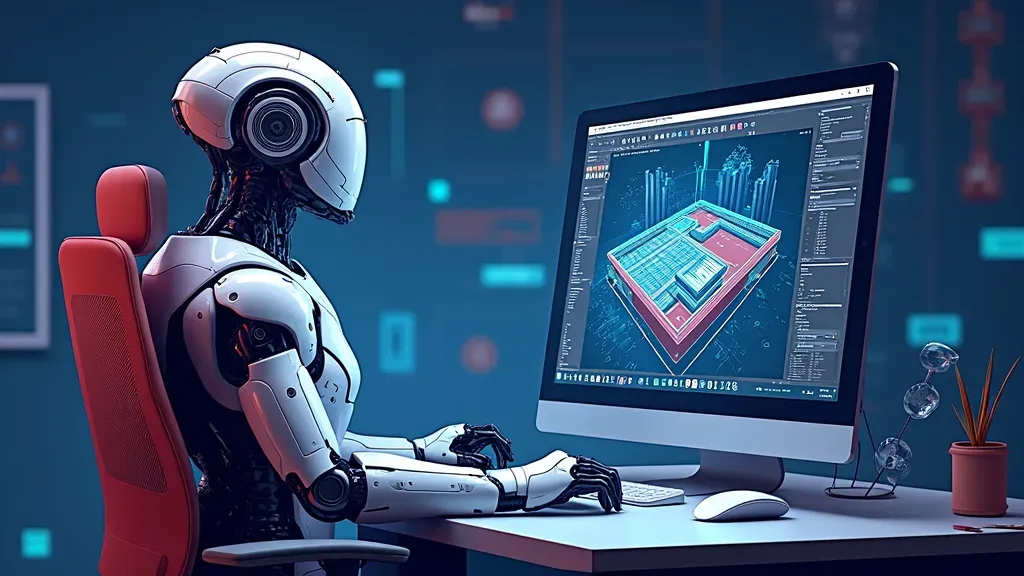
AI CAD software is revolutionizing the landscape of computer-aided design, making it more accessible and manageable for designers and engineers alike. This innovative tool leverages artificial intelligence to automate and simplify the challenging process of 3D modeling from 2D sketches. By mimicking human interaction with CAD systems, the AI agent reduces the learning curve and enhances design productivity, allowing even novices to create intricate models with ease. Integrating advancements like VideoCAD, a dataset capturing high-level design commands, this technology empowers users to focus on creativity rather than grappling with complex software commands. As AI CAD software continues to evolve, it stands poised to unlock new potentials in the design industry by streamlining workflows and fostering collaboration.
In the world of digital design, cutting-edge computer-aided design tools are being transformed through the integration of artificial intelligence. These advanced design applications not only facilitate the creation of 3D objects from simple sketches, but they also provide a virtual assistant to guide engineers and designers in executing detailed modeling tasks. Known as AI-driven CAD solutions, these innovative platforms utilize a vast dataset, such as VideoCAD, to enhance user experience and productivity. By implementing a sophisticated AI agent that operates much like a human designer, this technology minimizes the time and effort required for mastering complex modeling techniques. As a result, the barriers to entry in the realm of 3D modeling are significantly lowered, opening up new avenues for creativity and design exploration.
Revolutionizing Design with AI CAD Software
The integration of AI CAD software is transforming how designers approach the creation of 3D models. By using sophisticated AI agents, designers can rapidly convert 2D sketches into fully realized 3D forms, streamlining the design process. This innovative approach not only enhances the efficiency of producing intricate designs but also allows for more creativity as users can visualize their concepts in three dimensions with ease. As a result, the learning barriers that typically accompany traditional CAD systems are significantly lowered, providing opportunities for aspiring designers and engineers alike.
Moreover, AI CAD software’s capability to function like a human designer opens up a new frontier in computer-aided design. With features that allow the software to understand complex commands and execute them intuitively, users can focus more on the creative aspect of their work rather than getting bogged down by the technicalities of maneuvering through extensive software command lists. This shift signifies a milestone in the convergence of AI and design, where technology not only complements human skill but also empowers it.
Enhancing Design Productivity with VideoCAD
VideoCAD is a groundbreaking tool developed to enhance design productivity, particularly in the realm of 3D modeling. By harnessing a vast dataset of over 41,000 videos showcasing various CAD operations, VideoCAD enables users to learn and utilize computer-aided design without extensive training. This extensive repository not only serves as an educational platform but also functions as a practical guide for engineers seeking to refine their skills in constructing detailed 3D models. As they interact with VideoCAD, designers can witness firsthand the seamless interplay between sketches and final 3D outputs.
Furthermore, VideoCAD’s innovative approach to assisting users through AI agent technologies facilitates a more interactive learning experience. By implementing detailed UI actions that reflect human operation, the tool allows users to bypass many challenges associated with traditional CAD learning methods. As engineers engage with VideoCAD, they can experience a new level of productivity, as repetitive and mundane tasks are automated, freeing time for creative exploration and enhanced workflow.
Simplifying CAD Learning Curves with AI Technologies
The complex nature of CAD software often presents a steep learning curve for newcomers in engineering and design fields. This challenge is being addressed by AI technologies capable of mimicking human-driven interactions with CAD programs. The recent advancements in AI models allow users to automate intricate tasks that once required lengthy training, fostering a more welcoming environment for those who wish to delve into design. By simplifying CAD operations, the new generation of AI tools empowers users to engage in 3D modeling more confidently.
Moreover, these AI technologies not only reduce the barriers to entry in the CAD landscape but also refine the learning process through practical experience. Users benefit from a hands-on approach where they can learn via AI-driven demonstrations. As AI CAD software continues to evolve, future designers will likely see a shift in how design education is approached, paving the way for a generation of skilled professionals who can navigate complex design environments with ease.
The Future of AI in Computer-Aided Design
AI’s role in computer-aided design (CAD) is poised for substantial growth as researchers and developers explore more sophisticated applications for enhancing design processes. With tools like VideoCAD leading the way, the future promises a collaborative relationship between human designers and AI agents. This collaborative approach allows not only for enhanced automation of design tasks but also for more innovative solutions in product development, as AI can analyze existing designs quickly and suggest refinements based on user input or market needs.
In addition, the continuous improvement of AI-driven CAD software could result in resources becoming more widely available to a broader range of industries beyond traditional engineering. With easier access to advanced modeling tools, designers from diverse backgrounds may bring fresh perspectives to CAD applications. As the technology matures, it is expected that efficient AI systems will revolutionize not only how designs are created but also how industries can leverage CAD’s potential to meet changing demands in the market.
AI Agents as CAD Co-Pilots
The concept of AI agents acting as co-pilots in CAD environments represents a significant leap forward in design productivity. By collaborating with human users, AI agents can facilitate a dynamic workflow where suggestions and guidance are provided at critical junctures in the design process. This relationship not only enhances efficiency but also inspires more innovative design solutions, as designers can rely on their AI counterparts to propose strategies based on data-driven insights.
Furthermore, having an AI co-pilot means designers can explore more creative avenues without the constraints traditionally imposed by complex software. These agents can handle routine tasks, allowing human operators to concentrate on high-level design decisions. As the integration of AI in CAD environments becomes more common, it is likely that design processes will evolve dramatically, fostering an environment where creativity flourishes alongside technological advancement.
Advancements in 3D Modeling Techniques
The advancements in 3D modeling techniques, particularly through AI-driven solutions, are transforming how designers conceptualize and execute projects. With AI algorithms able to analyze and interpret user inputs, designers can now quickly wind through the conceptual phase to create accurate 3D representations of their ideas. These advancements not only refine the modeling process but also reduce the time it takes to bring a product from conception to realization. Engineers and designers alike stand to benefit from this accelerated workflow, enabling quicker iterations and the ability to test concepts rapidly.
Moreover, innovative tools such as VideoCAD are setting a new standard for how 3D models are developed. Designers are now able to access a repository of modeled examples that guide their own creative processes. The ability to learn and replicate complex modeling techniques through structured guidance contributes to a highly skilled workforce in the field of design and engineering. This evolution reflects a broader trend towards automation and efficiency in design technology, signaling a bright future for aspiring engineers and designers interplaying with CAD systems.
Creating New Opportunities in Design Education
The emergence of AI-driven technologies in CAD not only enhances existing design workflows but also opens up new opportunities in design education. With tools like VideoCAD, educational institutions can incorporate AI into their curricula, allowing students to engage with practical, real-world applications of 3D modeling directly from their initial training periods. This hands-on approach to learning empowers future designers with the skills necessary to adapt to the latest technological advancements.
Moreover, by simplifying the CAD learning curve, educational programs can attract a more diverse group of students who may have previously felt intimidated by complex design software. Accessibility to AI tools could lead to a more inclusive environment where creativity is fostered among individuals from various backgrounds. As educational institutions embrace these technologies, the next generation of designers will be better equipped to navigate the complexities of modern design, thereby contributing to diverse innovations in the field.
Interdisciplinary Applications of AI in Design
The interdisciplinary applications of AI in design present exciting new possibilities for collaboration among various fields. As AI co-pilots are integrated into CAD software, professionals from architecture, engineering, and product design can benefit from shared insights and methods. This cross-pollination of ideas fosters innovative approaches to problem-solving, as it merges different disciplines’ expertise in ways that were not previously possible.
Moreover, the potential for AI technologies to analyze market data and user interaction with designs creates a holistic view of the design process. Designers can gain insights into user preferences and industry trends, leading to more user-centered design strategies. As we embrace the intersection of AI and design, it is clear that the future holds immense potential for creativity and collaboration across diverse fields.
AI as a Transformative Force in Engineering
AI technology is rapidly becoming a transformative force in the field of engineering, particularly in relation to computer-aided design (CAD). The advent of AI agents capable of drawing insights from large datasets and automating intricate tasks can significantly enhance engineering workflows. With tools like VideoCAD, engineers can expect to see improvements in design accuracy, productivity, and overall project turnaround times. This transformative potential allows for thorough exploration and innovation, a crucial aspect of modern engineering.
Additionally, AI’s influence is paving the way for a new generation of engineers who can utilize these advanced tools to rethink traditional design challenges. As AI continues to develop models that encompass a variety of functions within CAD environments, the opportunity to streamline processes and enhance productivity emerges. Engineers who stay ahead of the curve in adopting these AI technologies will likely find themselves leading the charge into an innovative future of design and engineering.
Frequently Asked Questions
What is AI CAD software and how does it work?
AI CAD software combines artificial intelligence with computer-aided design (CAD) tools to automate complex modeling tasks. By harnessing AI models, such as the VideoCAD project from MIT, these systems can convert 2D sketches into fully realized 3D models by mimicking human user interactions within the software, thus enhancing design productivity.
How can AI agents improve the learning experience for CAD software users?
AI agents can significantly enhance the learning experience for users of CAD software by simplifying the workflow. With tools like VideoCAD, these AI systems can guide new users through the CAD environment, offering step-by-step assistance and reducing the steep learning curve often associated with mastering complex design functionalities.
What role does VideoCAD play in advancing AI CAD software capabilities?
VideoCAD is a groundbreaking dataset developed to train AI models for CAD software usage. By providing over 41,000 instructional videos on creating 3D models, it allows AI agents to learn detailed user-interface operations, which enables them to autonomously perform CAD tasks and enhance designer productivity.
Can AI CAD software assist in creating complex 3D models?
Yes, AI CAD software is specifically designed to assist in creating complex 3D models. The new AI systems, like those built on the VideoCAD dataset, can interpret 2D sketches and execute the necessary commands within the CAD software, efficiently generating intricate models just as a skilled designer would.
What benefits does AI-driven computer-aided design provide to engineers?
AI-driven computer-aided design offers numerous benefits, such as increased productivity, reduced time for learning CAD systems, and the ability to automate repetitive tasks. With tools like VideoCAD, engineers can focus on creativity and innovative design rather than getting bogged down by complex software commands.
How does MIT’s AI model differ from traditional CAD software training?
MIT’s AI model offers a unique approach by learning from high-level design commands and translating them into user-interface actions within CAD software. Unlike traditional training, which often relies on manual practice, this AI agent can operate the software through learned interactions, making the learning process quicker and more accessible.
Is AI CAD software suitable for users with no prior CAD training?
Absolutely, AI CAD software is designed to be more accessible for users without prior CAD training. By utilizing AI models like VideoCAD, individuals can create detailed 3D models more intuitively and efficiently, lowering the barrier to entry for aspiring designers and engineers.
What future developments can we expect from AI CAD tools like VideoCAD?
Future developments in AI CAD tools like VideoCAD may include the incorporation of more complex design tasks, enhanced user interactions across various CAD systems, and improved automation capabilities for intricate modeling processes. This could revolutionize how designers approach workflows and collaborate with AI in the design process.
| Key Points | Details |
|---|---|
| Introduction of AI CAD Software | An AI agent has been developed to transform 2D sketches into 3D models using CAD software. |
| VideoCAD Dataset | Contains over 41,000 examples demonstrating the 3D modeling process. |
| Enhanced Productivity | AI-driven CAD software aims to simplify the learning curve and enhance designers’ productivity. |
| Human-like Operation | The AI operates CAD as a human would, executing commands and selecting tools. |
| Future Developments | Vision of AI as a “CAD co-pilot” to assist with subsequent design steps and automate tasks. |
Summary
AI CAD software is transforming the landscape of design and engineering by introducing innovative AI agents capable of streamlining the 3D modeling process. By utilizing datasets like VideoCAD, which demonstrates the creation of 3D objects, the technology aims to make CAD tools more accessible while improving productivity for engineers and designers alike. With the promise of a more intuitive learning experience, this new AI technology will empower individuals, regardless of their prior training, to generate detailed 3D models efficiently.