
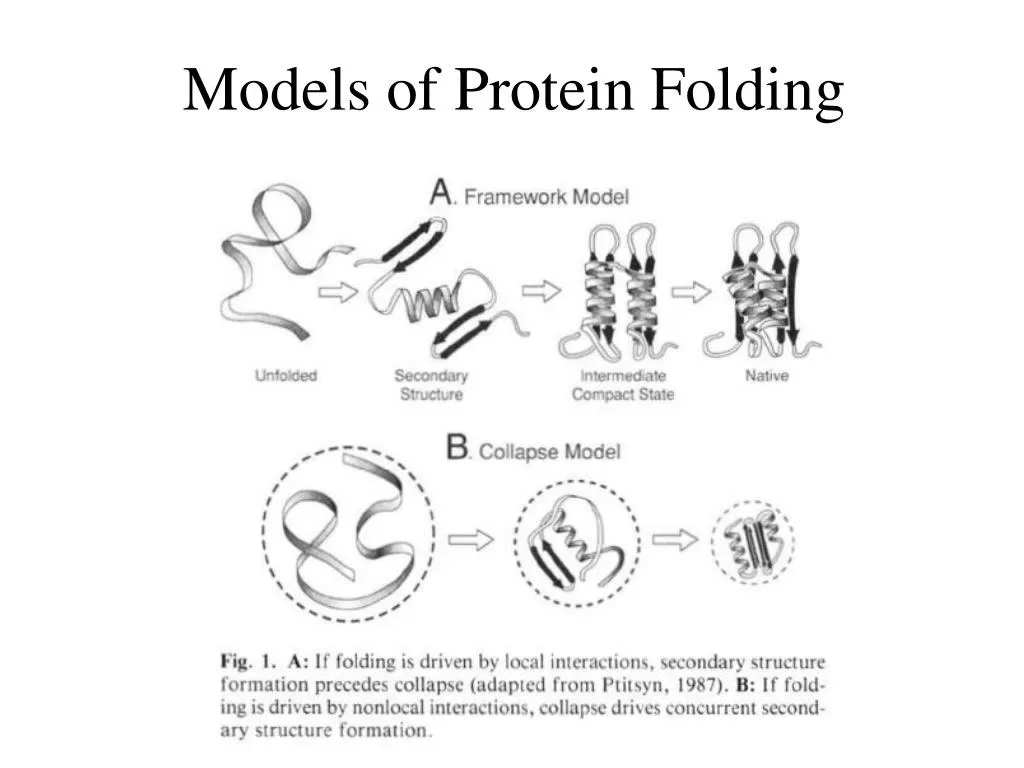
Protein folding models are revolutionizing the field of biology by offering insights into the complex structures of proteins and their functions. This innovative aspect of computational biology not only aids in understanding proteins but also plays a crucial role in protein generation and structure prediction. Recent advancements, such as latent diffusion models and multimodal generative models, harness artificial intelligence to simulate and generate proteins effectively. As the significance of AI in drug design grows, these models become vital tools for researchers looking to design and engineer biologically relevant proteins. By seamlessly merging sequence data with structural predictions, protein folding models are paving the way for groundbreaking discoveries in various biomedical applications.
The realm of computational biology is experiencing a paradigm shift with the emergence of advanced models that analyze and predict protein structures. Known as protein folding simulations, these methodologies utilize cutting-edge techniques to explore the intricate relationships between protein sequences and their three-dimensional conformations. With a focus on protein design and generation, researchers are employing innovative strategies such as latent approaches and generative algorithms, which enable them to create complex proteins tailored for specific functions. As these technologies gain traction, their implications extend well beyond basic research, significantly impacting fields like drug development and disease treatment. By harnessing the power of AI and sophisticated modeling, scientists are poised to unlock new potential in the study and application of proteins.
Harnessing Protein Folding Models in AI for Drug Development
The integration of protein folding models into artificial intelligence (AI) has revolutionized the field of drug design. These models, like AlphaFold2, have achieved remarkable accuracy in predicting the 3D structures of proteins, which is crucial for developing effective drugs. By utilizing latent diffusion models, researchers can explore the latent space of these protein folding models to generate novel proteins that meet specific therapeutic needs. The ability to generate protein sequences and their accompanying structures simultaneously enhances the efficiency of the drug discovery process, allowing for rapid prototyping and testing of potential biologics.
Moreover, the application of AI in drug design leverages the expansive databases of amino acid sequences available, vastly outstripping the limited structural datasets. This is where multimodal generative models like PLAID come into play, as they can generate valid protein sequences and their corresponding structures, addressing the challenges posed by organism specificity and the complexity of biologics. As a result, this approach paves the way for tailored therapeutics that are optimized for human use, minimizing immune responses and enhancing efficacy.
Frequently Asked Questions
What advancements do protein folding models like PLAID bring to protein generation?
PLAID is a groundbreaking multimodal generative model that enhances protein generation by simultaneously creating both protein sequences and their corresponding 3D structures. By leveraging the latent space of existing protein folding models, PLAID addresses the challenges of multimodal co-generation, ultimately improving the efficiency and accuracy of protein design.
How do latent diffusion models contribute to protein folding and structure prediction?
Latent diffusion models play a crucial role in protein folding by enabling the sampling of the latent space, which represents valid protein structures. This approach allows for the generation of all-atom protein structures from sequence-only data, paving the way for more accurate protein structure prediction and innovative drug design applications.
What role does multimodal generative modeling play in AI for drug design?
Multimodal generative modeling, as demonstrated in PLAID, is integral to AI in drug design by facilitating the generation of proteins that meet specific functional and organismal criteria. This capability is essential for creating biologics that are compatible with human systems, enhancing the potential for effective drug development.
Can PLAID’s method of protein generation be applied to other biological systems?
Yes, PLAID’s method of using sequence-to-structure prediction can be adapted to various biological systems beyond proteins. The model’s framework for multimodal generation allows researchers to tackle complex interactions, such as proteins with nucleic acids or ligands, broadening its applicability in biological research.
What limitations exist in previous protein folding models that PLAID addresses?
Previous protein folding models often faced limitations like generating only backbone atoms without sidechains and lacking organism specificity. PLAID overcomes these challenges by integrating both discrete sequence and continuous structure generation, enabling the creation of complete all-atom protein structures suitable for human use.
How does PLAID improve the efficiency of training with protein sequence data?
PLAID improves training efficiency by focusing solely on protein sequences, which are significantly more abundant and easier to obtain compared to structural data. By employing a latent diffusion model, PLAID can effectively learn the underlying data distribution and generate accurate protein structures without needing extensive structural datasets.
| Key Point | Description |
|---|---|
| PLAID Model Overview | PLAID is a multimodal generative model that creates protein sequences and structures by exploring the latent space of existing protein folding models. |
| Nobel Prize Recognition | AlphaFold2 was awarded the 2024 Nobel Prize, showcasing the importance of AI in biological research and setting the stage for developments like PLAID. |
| Multimodal Co-generation | PLAID generates both discrete (protein sequences) and continuous (3D structures) outputs simultaneously, addressing a significant challenge in protein modeling. |
| Considerations for Drug Design | Challenges include producing all-atom structures, ensuring specificity for human proteins, and controlling properties for practical use in drug discovery. |
| Control Over Generation | PLAID aims to provide a textual interface for specifying compositional constraints, allowing precise protein generation. |
| Sequence-Only Training | The model trains exclusively on sequence data, which is more abundant and less expensive to obtain than structural data. |
| Diffusion Model for Latent Space | PLAID employs a diffusion model to navigate the latent space of protein folding, using pretrained models like ESMFold to facilitate structure generation. |
| Compression of Latent Space | CHEAP (Compressed Hourglass Embedding Adaptations of Proteins) is introduced to effectively learn a compressed representation of the sequence-structure relations. |
| Future Directions | The approach can be adapted for multi-modal generation in various applications beyond proteins, paving the way for more complex system modeling. |
Summary
Protein Folding Models are at the core of groundbreaking advancements in the drug design process. The PLAID model represents a significant step forward in leveraging these models by integrating advanced AI techniques to generate functional protein sequences and their corresponding 3D structures simultaneously. By addressing previous limitations encountered by single-modality generative models, PLAID enhances the efficiency and usability of protein generation in real-world applications, particularly in the biomedical field. Through innovative training methods and thoughtful control mechanisms, PLAID not only showcases the potential of generative models but also opens up opportunities for further exploration in the realm of protein design.