
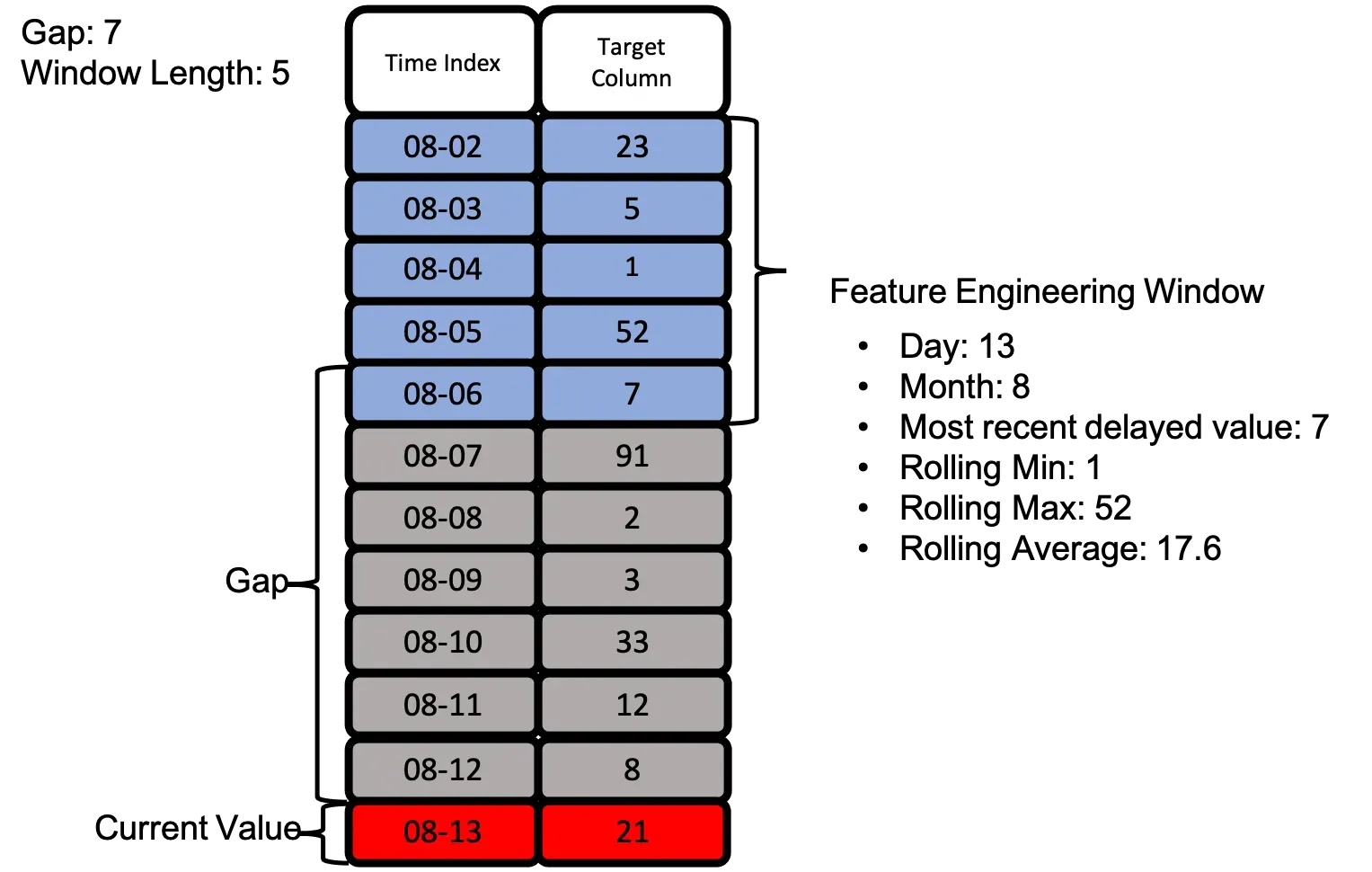
Feature Engineering for Time Series is a critical aspect of time series forecasting that involves transforming raw data into structured inputs suitable for predictive analytics. By creating meaningful temporal features, we can enhance the performance of machine learning models tasked with understanding and predicting future trends. Data transformations like lagging, rolling statistics, and differencing are essential techniques that allow analysts to capture intricate patterns and relationships over time, crucial for accurate outcomes. As we delve into feature engineering, we unlock the potential of temporal features, driving insights that inform business decisions. This article serves as your guide to getting hands-on with these powerful techniques for optimizing time series forecasting.
Time series analysis, often known as temporal data analysis, plays a vital role in understanding trends over time. Incorporating effective feature engineering can drastically improve how we interpret and predict outcomes in this domain. Techniques such as creating lag features, using rolling calculations, and applying differencing are key to extracting valuable insights from sequential data. By manipulating data in this manner, we ensure that our predictive models are more responsive to shifts and patterns inherent in the time-dependent nature of our datasets. This introduction to temporal features will set the stage for enhanced predictive analytics in various applications.
Understanding Time Series Forecasting
Time series forecasting is a statistical technique used to predict future values based on previously observed values. This method is crucial in various domains, such as finance, healthcare, and retail, where understanding trends over time can significantly impact decision-making. Effective forecasting relies on identifying patterns, seasonality, and trends within the dataset, allowing analysts to draw actionable insights.
Incorporating techniques such as feature engineering and the transformation of temporal features enhances the accuracy of time series forecasts. By leveraging historical data, models can recognize repeating patterns in sales data or customer behavior, ultimately leading to more reliable predictions. Advanced methods, including autoregressive integrated moving average (ARIMA) and machine learning models, can be employed to synthesize valuable forecasting insights.
Frequently Asked Questions
What is feature engineering for time series and why is it essential for predictive analytics?
Feature engineering for time series involves transforming raw data into informative features that enable better modeling and forecasting. It’s essential for predictive analytics because it helps uncover patterns, stabilize variance, and improve model performance by capturing temporal dependencies effectively.
How can lagging features enhance time series forecasting?
Lagging features enhance time series forecasting by incorporating past values into the model, thereby providing a sense of ‘memory’. This allows models to recognize trends over time, making them more accurate in predicting future values, such as bike rental counts based on previous days’ data.
What role do rolling statistics play in the feature engineering process for time series data?
Rolling statistics are crucial in feature engineering for time series as they summarize historical data through metrics like rolling averages and standard deviations. This helps in identifying trends and patterns over defined periods, improving the model’s understanding of temporal dynamics.
How does differencing contribute to feature engineering in time series analysis?
Differencing is a key technique in feature engineering for time series that reveals changes in data over time. By calculating the difference between current and past values, it helps stabilize the series and highlight underlying patterns, which is particularly useful for making predictions.
What are some common transformations used in feature engineering for time series forecasting?
Common transformations in feature engineering for time series forecasting include creating lag features, calculating rolling statistics, and performing differencing. These techniques help manage seasonality, trends, and other temporal features critical for accurate predictive modeling.
What is the importance of handling missing values after feature engineering for time series datasets?
Handling missing values is critical after feature engineering for time series datasets because transformations like lagging and rolling calculations often introduce NaN values. Properly managing these missing values ensures model integrity and performance during predictive analytics.
Can feature engineering for time series be automated, and if so, how?
Yes, feature engineering for time series can be automated using libraries and frameworks that provide functionalities for creating lag features, rolling statistics, and other transformations. Tools like FeatureTools or automated machine learning frameworks can assist in streamlining this process, saving time and ensuring consistency.
What are some examples of temporal features to include in time series predictive models?
Examples of temporal features to include in time series predictive models are day of the week, month, holiday flags, and weekend indicators. These features can significantly enhance model performance by capturing critical seasonal patterns in the data.
How does adding temporal features improve predictive analytics in time series?
Adding temporal features improves predictive analytics in time series by allowing models to capture and learn from the inherent seasonal and temporal patterns present in the data, thus enhancing forecasting accuracy and providing deeper insights into trends.
What challenges do practitioners face when performing feature engineering for time series data?
Practitioners face several challenges when performing feature engineering for time series data, including dealing with missing values, selecting relevant features among numerous options, managing seasonal fluctuations, and ensuring that the transformations do not introduce bias or overfitting in the model.
| Feature Engineering Technique | Description | Code Example |
|---|---|---|
| Lag Features | Incorporating past values as predictors to provide context about recent trends. | df[‘cnt_lag1’] = df[‘cnt’].shift(1) df[‘cnt_lag2’] = df[‘cnt’].shift(2) df[‘cnt_lag7’] = df[‘cnt’].shift(7) |
| Rolling Statistics | Calculating aggregates over a sliding window to analyze trends and variations. | df[‘cnt_roll7_mean’] = df[‘cnt’].shift(1).rolling(window=7).mean() df[‘cnt_roll7_std’] = df[‘cnt’].shift(1).rolling(window=7).std() |
| Differencing | Capturing variations over time by subtracting previous values from current values. | df[‘cnt_diff1’] = df[‘cnt’] – df[‘cnt’].shift(1) df[‘cnt_diff7’] = df[‘cnt’] – df[‘cnt’].shift(7) |
Summary
Feature Engineering for Time Series is crucial for enhancing the predictive capabilities of models by uncovering hidden patterns and stabilizing data properties. The methods discussed, including lag features, rolling statistics, and differencing, allow data scientists to transform raw time series data into more informative forms. Implementing these techniques not only improves the predictive performance but also provides insights into underlying trends and behaviors within the data.