
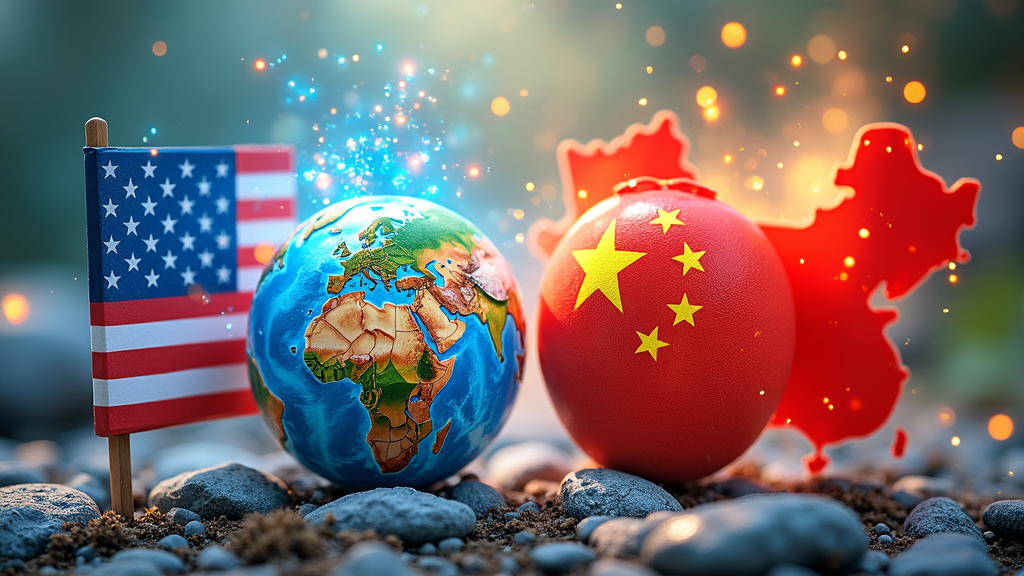
US-China Relations have emerged as one of the most pivotal dynamics influencing global politics and economics today. As the two largest economies and carbon emitters, their interactions significantly shape climate change diplomacy, especially in the context of an ongoing energy transition. Experts argue that amidst increasing US-China competition, collaboration on pressing issues like environmental sustainability and technological advancement must be prioritized to curb the devastating impacts of climate change. The complexities of their relationship, which encompasses trade wars and technological rivalries, highlight the urgent need for both nations to navigate their global economic rivalry responsibly. Balancing competition with cooperation could not only enhance economic growth but also foster a more sustainable future.
The bilateral relationship between the United States and China stands as a cornerstone of contemporary international affairs, often referred to in discussions of global diplomacy and competition. Given their immense influence, these two nations find themselves at the forefront of pressing challenges, particularly in terms of environmental initiatives and technological innovation. The ongoing race within various sectors, including the fields of science, technology, engineering, and mathematics (STEM), places them in a unique competitive space where collaboration could yield monumental benefits. As both countries strive for dominance amidst their multifaceted rivalry, understanding the factors influencing their engagements is crucial for anticipating future developments. Moving forward, how they manage their competition while addressing global issues such as climate change will be a defining element of the twenty-first century.
The Role of Climate Change Diplomacy in US-China Relations
Climate change diplomacy stands out as a vital arena for collaboration between the United States and China. As the world’s two largest carbon emitters, both nations carry the responsibility to lead global efforts in combating climate change. Former U.S. ambassador Nicholas Burns emphasizes that, despite the intense rivalry in trade and technology, there exists a shared interest in developing sustainable practices. Joint initiatives in renewable energy technologies could pave the way for both countries to fulfill their commitments to reduce greenhouse gas emissions while also fostering economic growth.
Strategic partnerships focusing on climate change allow the U.S. and China to leverage each other’s strengths in innovation and research. The U.S. possesses advanced technologies in renewable energy, while China’s manufacturing capabilities make it a leading producer of clean energy components. Collaborating on climate diplomacy not only addresses environmental challenges but also serves as a diplomatic tool to ease tensions stemming from other competitive areas like trade and military. By engaging in constructive dialogue and collaborative projects, both nations can reinforce their commitment to a healthier planet.
Navigating US-China Competition in Global Economic Rivalry
The ongoing economic rivalry between the U.S. and China is characterized by intense competition in multiple domains, including technology and trade. Economically, both countries aim to assert dominance globally, as seen through high tariffs and trade disputes that have reshaped international economic relationships. Nicholas Burns highlighted that neither nation is willing to take a backseat, which has resulted in significant friction affecting global supply chains. Understanding the intricacies of this rivalry is essential to navigating the challenges it poses in a world increasingly reliant on interconnected markets.
Moreover, the economic competition encapsulates a broader struggle for influence within global organizations and markets. The push for technological superiority, particularly in crucial sectors such as artificial intelligence and biotechnology, is pivotal to sustaining economic growth. As Burns noted, both nations must find ways to manage competition to prevent escalation into conflict, which could have dire consequences not just for them, but for the global economy at large. Maintaining a balance between competition and cooperation becomes critical to achieving resilient global economic outcomes.
Innovative STEM Education: A Key to Future Competitiveness
STEM education plays a crucial role in sustaining national competitiveness and fostering innovation, especially in the context of US-China relations. The disparity in STEM degree attainment between the two nations is stark, as highlighted by Burns, who noted that a significant percentage of Chinese university students are pursuing careers in science and technology compared to their American counterparts. This educational gap signals a potential future disadvantage for the U.S. if it doesn’t increase its output of skilled STEM graduates, who are essential for driving industries such as clean energy and technology advancement.
Investing in STEM education not only prepares the workforce for future challenges, but also strengthens the overall technological landscape. The U.S. must focus on initiatives that encourage students to engage in STEM fields, addressing barriers to entry and making these pathways more accessible. By doing so, it can ensure that the next generation of innovators and leaders are equipped to compete effectively against other global powers, particularly China, which is rapidly advancing in various technological sectors due to its strong emphasis on education in science, technology, engineering, and mathematics.
Energy Transition: US-China Collaboration Opportunities
As the world transitions toward sustainable energy solutions, collaboration between the U.S. and China becomes increasingly imperative. Burns observes that despite China’s leadership in clean energy technologies, it still relies heavily on coal, which poses a significant challenge to its climate goals. This contradiction presents an opportunity for the U.S. to engage with China in transforming its energy sector through the promotion of cleaner alternatives. Cooperative projects in renewable energy, for instance, can set a foundation for both countries to achieve their respective environmental targets while benefiting from shared expertise.
In addition, the energy transition initiative offers a unique avenue to mitigate competition and foster goodwill amidst prevailing tensions. With both countries possessing distinct strengths in renewable technologies and resources, working together could lead to lower costs and accelerated deployment of clean energy solutions. Collaborative efforts in research and development, as well as technology sharing agreements, can stimulate innovation and create impactful changes in the energy landscape globally. Emphasizing mutual benefits can help build trust and pave the way for more comprehensive dialogues on broader issues affecting US-China relations.
Addressing Global Challenges through Strategic Diplomacy
Strategic diplomacy is essential in addressing transnational challenges that impact both the U.S. and China, going beyond mere economic and military rivalry. Nicholas Burns advocates for a diplomatic approach that focuses on collaboration in areas such as climate change, public health, and technological regulation. As global crises like pandemics and climate disasters know no borders, joint efforts become necessary to develop effective frameworks that ensure both nations work together for a stable international system. Successful diplomacy can transform competitive relationships into partnerships that yield benefits for both nations and the world.
Moreover, engaging in effective diplomacy can help manage perceptions and reduce misconceptions that fuel animosity. By promoting open dialogue and transparent communication, the U.S. and China can progress towards de-escalating tensions and building cooperative frameworks. This proactive approach is crucial in shaping a future where both countries can coexist peacefully, allowing them to focus on shared goals rather than adversarial competition. Ultimately, fostering understanding and collaboration through diplomacy can lead to a more stable and productive international relationship.
Future of US-China Relations: Challenges and Opportunities
The future of US-China relations hinges on navigating the complexities of competition while capitalizing on opportunities for collaboration. As both nations grapple with their roles as global leaders, it is vital to recognize areas where they can work together toward common goals—most notably in the fight against climate change. The necessity for a united front in addressing environmental issues presents an opportunity not only for bilateral cooperation but also for global leadership. Both nations have a profound impact on international climate policies, making their relationship pivotal in setting the tone for cooperative global action.
Navigating future challenges will require innovative diplomatic solutions that embrace competition without compromising collaborative endeavors. Emphasizing shared values, such as global security and sustainable development, can help shift the narrative from adversarial to cooperative. Additionally, as new geopolitical realities emerge, both countries must adapt their strategies to account for shifting alliances and changing global dynamics. By focusing on opportunities for collaboration amidst competition, US-China relations can evolve into a framework that supports peace and prosperity in the face of global uncertainty.
Technological Advances and Their Impact on US-China Dynamics
The technological rivalry between the U.S. and China is reshaping the dynamics of their relationship, influencing everything from trade policies to military strategies. As Burns points out, the race for superiority in emerging technologies like artificial intelligence and quantum computing represents a critical battleground. This competitive landscape is not just about economic dominance; it is also about setting the global standards for technology which will dictate future interactions and policies. The implications of this technological race extend beyond bilateral relations; they affect global alliances and the international order.
While competition drives innovation, it can also lead to a dangerous escalation if not carefully managed. Both nations must strive to balance their competitive instincts with the need for cooperation in regulatory frameworks governing technology and data usage. Ensuring that technological advancements are developed responsibly, with considerations for ethical standards and global security, is essential for sustainable progress. Collaborative efforts to set international standards can lead to a more stable technological environment, fostering peace and reducing the likelihood of conflict arising from misunderstandings and mistrust.
The Importance of Communication in US-China Relations
Effective communication is the cornerstone of successful diplomacy between the United States and China. As Burns emphasizes, normalizing dialogue is essential to prevent misunderstandings that could spiral into conflicts. High-level talks, open channels, and recurring engagements can create a framework for addressing contentious issues while allowing for the exploration of cooperative opportunities. By prioritizing communication, both countries can build trust and reduce the potential for escalation in various arenas, from trade disputes to military confrontations.
Moreover, enhancing communication extends beyond government officials; it encompasses academic, business, and civil society interactions. Encouraging exchanges in STEM education, technology practices, and cultural understanding can strengthen grassroots relationships that support broader diplomatic efforts. Promoting initiatives that foster collaborative learning and joint research can help bridge gaps in understanding and create a more cohesive approach to tackling global challenges. Ultimately, robust communication strategies will be pivotal in ensuring that US-China relations evolve constructively, emphasizing cooperation over competition.
The Interconnectedness of Global Issues and US-China Diplomacy
As nations become increasingly interconnected, the significance of US-China diplomacy becomes paramount in addressing global issues that transcend borders. Climate change, public health crises, and economic instability are challenges that demand coordinated efforts from both countries. Burns highlights the urgency of confronting these transnational issues collectively, as they affect the livelihoods of billions worldwide. Collaborative initiatives in these areas can create shared goals that foster mutual understanding and build a foundation for addressing more contentious topics.
The interconnectedness of global issues underscores the necessity for the U.S. and China to adopt a holistic approach to their diplomatic efforts. By recognizing that their actions in one sphere—be it economic policy, environmental regulation, or technological development—impact a multitude of areas, both nations can better navigate their complex relationships. Fostering a comprehensive perspective on diplomacy will not only enhance cooperation but also pave the way for sustainable solutions that uphold the interests of both nations while contributing to global well-being.
Frequently Asked Questions
How does climate change diplomacy affect US-China relations?
Climate change diplomacy is a critical factor in US-China relations, as both nations are the largest emitters of carbon globally. Diplomatic efforts in this area can foster cooperation on environmental issues, reduce tensions, and lead to joint initiatives aimed at addressing global climate challenges.
What is the current state of US-China competition in technology and innovation?
US-China competition in technology centers around artificial intelligence, quantum computing, and biotechnology. Both countries are investing heavily in these areas, with China focusing on STEM education to bolster its future workforce, significantly impacting their competitive landscape.
How does the energy transition impact US-China relations?
The energy transition is pivotal in US-China relations, especially as both nations seek to lead in clean energy technologies. Cooperation in renewable energy development could reduce tensions, while competition for rare earth materials essential for green technologies amplifies their rivalry.
In what ways does STEM education affect US-China relations?
STEM education impacts US-China relations by determining the technological prowess of each nation. China’s emphasis on STEM has resulted in a higher percentage of graduates in these fields compared to the U.S., influencing the global technology race and economic rivalry.
What role does global economic rivalry play in US-China relations?
Global economic rivalry shapes US-China relations significantly, with both countries vying for dominance in trade and economic influence. This competition has led to trade wars, tariffs, and a complex interplay of cooperation and conflict, affecting global economic stability.
| Key Points | Details |
|---|---|
| Climate Change | Highlighted as a key area for diplomatic engagement between the U.S. and China. |
| Competition Areas | Military, technology, trade and economics, and values. |
| Trade Frictions | Significant trade wars and tariffs between the two nations have created friction. |
| Technological Rivalry | China’s focus on STEM education contrasts with the U.S., affecting technological competitiveness. |
| Energy Sector Competition | China’s lead in rare earth elements impacting clean energy production and economic competition. |
| Communication and Diplomacy | Emphasis on the need for normalized communication to prevent conflict. |
Summary
US-China relations are characterized by both competition and the necessity for collaboration, particularly in crucial areas like climate change. As highlighted by former U.S. ambassador Nicholas Burns, these two nations are the largest emitters of carbon globally and have the potential to influence the global energy transition. While their economic rivalry poses challenges—evidenced by recent trade tensions—they also share a critical opportunity to engage diplomatically. Moving forward, it is essential for the United States and China to find ways to manage their complex relationship to foster cooperation while competing effectively in technology and energy industries.