
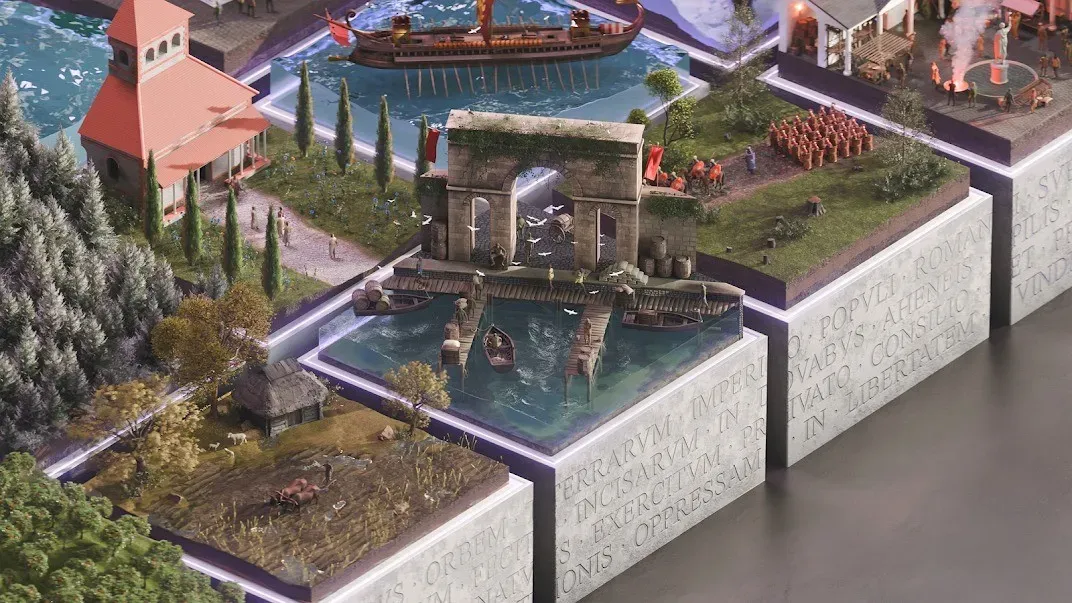
The Aeneas AI model is revolutionizing the field of historical text analysis by providing an innovative tool for interpreting ancient inscriptions. This groundbreaking model facilitates historians’ efforts to contextualize fragmentary texts that are critical for understanding Roman history. By leveraging sophisticated algorithms, Aeneas not only accelerates the identification of parallels across vast collections of Latin inscriptions but also enhances the accuracy of inscription restoration. As the role of AI in archaeology continues to grow, Aeneas exemplifies how technology can unveil rich insights into our ancient past, offering vital connections between historical texts and the civilization that produced them. With its ability to analyze and restore damaged inscriptions, the Aeneas model is set to transform how scholars engage with and decode the intricacies of Roman history.
Introducing Aeneas, an advanced artificial intelligence tool designed specifically for decoding ancient texts and uncovering the nuances of historical inscriptions. This state-of-the-art model is at the forefront of modern historical analysis, enabling researchers to explore the depth of Roman inscriptions and their implications within the broader narrative of ancient societies. As scholars delve into the complexities of inscription restoration and dating, Aeneas emerges as a pivotal resource in understanding the socio-political fabric of the time. By facilitating a faster and more accurate examination of correlation between various inscriptions, Aeneas enhances the methodologies used for historical text investigation. With its transformative impact, this AI-driven approach to analyzing historical texts promises to provide unprecedented insights into the world of ancient Roman culture.
Revolutionizing Historical Text Analysis with Aeneas
The Aeneas AI model is a groundbreaking advancement in the field of historical text analysis. By leveraging artificial intelligence, it shifts the paradigm through which historians study ancient inscriptions. Traditional methods required extensive expertise to identify parallels and establish historical context from fragmented texts. In contrast, Aeneas automates this process, drastically reducing the time needed to analyze vast collections of Latin inscriptions. This significant progression allows researchers to focus on interpreting results rather than getting bogged down in the minutiae of data collection and analysis.
Not only does Aeneas enhance the efficiency of inscription interpretation, but it also amplifies the depth of insights obtained from historical texts. By converting inscriptions into unique historical fingerprints, Aeneas identifies subtle connections across diverse texts, showcasing complexities of Roman history insights that were previously unrecognized. Its algorithm processes multiple data formats, enriching historical text analysis with visual data alongside textual data, hence expanding the potential for a comprehensive understanding of the Roman world.
The Importance of Restoring Ancient Inscriptions
Restoring ancient inscriptions is vital for preserving historical narratives that shed light on past cultures. Many inscriptions have suffered damage over time due to environmental factors or human interference. The AI model Aeneas plays an essential role in the restoration process by identifying gaps in texts and predicting their potential content. This is particularly significant given that many inscriptions are partially preserved, making full interpretation a daunting task without sophisticated tools. The ability of Aeneas to restore gaps of unknown length further enriches the corpus of historical texts available to researchers.
With Aeneas, historical text analysis evolves beyond mere data retrieval. Instead, it fosters a more nuanced approach to inscription restoration that goes beyond visual and textual repairs. By contextualizing inscriptions within a broader historical framework, Aeneas provides indispensable insights into the social, political, and economic conditions of the time. As historians continue to amplify their understanding of Roman history through restored inscriptions, Aeneas stands as a beacon of innovation, bridging gaps in the vast expanse of ancient knowledge.
Enhancing Archaeological Discoveries through AI Technology
The integration of AI technology like Aeneas into archaeology marks an exciting frontier in uncovering the secrets of the past. Inscriptions, which have always played a crucial role in understanding ancient civilizations, can now be analyzed more comprehensively due to Aeneas’s capabilities. The model’s ability to quickly process and contextualize data enables archaeologists to discover connections between different artifacts and texts, revealing new narratives about society and culture in the Roman era.
Furthermore, Aeneas’s multimodal processing allows for a more interactive interpretation of archaeological findings. By using visual data alongside textual information, it not only provides a better understanding of inscriptions but also enhances the practical aspects of archaeological work. As researchers continue to explore ancient sites, Aeneas serves as a potent ally in excavating layers of history that were previously obscured, paving the way for deeper explorations into ancient Roman life.
Pioneering the Future of Roman History Insights
As researchers explore the potential of Aeneas further, the future of Roman historical insights appears more promising than ever. This model represents not just a technological leap, but a methodological evolution in how historians interact with and interpret ancient inscriptions. With its ability to generate diverse interpretations and contextual analyses, Aeneas opens up new avenues for scholarly discussion surrounding Roman history. Given the model’s findings, it prompts historians to reconsider established dates, parallels, and cultural significance of Roman texts.
The implications of Aeneas extend beyond mere scholarship; they have the potential to alter the trajectory of historical studies significantly. By facilitating more collaborative research between institutions and experts, it promises a rich tapestry of insights into Roman life. As additional features continue to be rolled out, including an expansion into ancient Greek contexts, the applications of Aeneas could transform not only our understanding of inscriptions but of ancient civilizations in general.
Collaborative Research Enhancing Historical Contextualization
The collaborative effort between institutions such as the University of Nottingham and multiple research partners has led to the creation of Aeneas, shining a light on the collective potential of interdisciplinary studies. By pooling resources and expertise, this project seeks to revolutionize the way historical context is interpreted through ancient inscriptions. The synergy between AI technology and historical scholarship is evident as the collaborators push boundaries, aiming to unravel linguistic puzzles of the Roman world much faster than ever before.
This partnership demonstrates how collaborative research fosters innovation that transcends traditional disciplinary lines. The shared vision of utilizing AI in archaeology not only broadens the scope of inscription analysis but also enriches the academic dialogue surrounding the implications of such findings. Aeneas offers an interactive platform that encourages historians and researchers to engage more dynamically with ancient texts, fostering an environment where knowledge proliferates through shared discovery and insight.
Engaging with Fragmentary Texts through AI Innovations
Fragmentary texts pose a unique challenge for historians who seek to reconstruct narratives from the past. The advent of Aeneas enables scholars to approach these damaged fragments with new hope for reconstruction and interpretation. Rather than viewing missing pieces as insurmountable obstacles, historians can utilize Aeneas to suggest potential continuations of incomplete inscriptions based on patterns found in similar texts. This capability brings to light the richness of the available historical data and the stories that may reside within fragmented records.
Through innovative AI technology, Aeneas empowers scholars to engage with these texts actively instead of just passively cataloging them. By proposing contextual relationships and potential reconstructions, the model encourages historians to make informed hypotheses on incomplete inscriptions. This not only invigorates historical inquiry but also inspires a greater appreciation for the complexities of ancient writings, ultimately leading to a more thorough understanding of Roman life.
The Role of Open Data in Historical Text Analysis
The initiative to make Aeneas freely accessible with open-source code and datasets signifies an essential shift in how historical text analysis is approached. By democratizing access to cutting-edge technology, this effort allows a wide range of researchers and historians to experiment with AI in their work on ancient inscriptions. By facilitating shared data and insights, Aeneas promotes collaborative efforts to analyze Roman history across different contexts and locales, enriching historical scholarship.
Open data also encourages transparency in the methodologies used for inscription analysis. As researchers utilize Aeneas in diverse ways, the resulting findings can be openly reviewed, critiqued, and built upon, leading to a robust exchange of ideas within the academic community. This collective engagement not only enhances the reliability of interpretations but also fosters a sense of camaraderie among historians working to decipher the complexities of ancient civilizations.
Future Directions for AI in Archaeology
The introduction of Aeneas marks just the beginning of a larger trend where AI technologies will play a crucial role in archaeology and historical text analysis. Future versions of the model are expected to integrate additional features that could facilitate the study of varied inscriptive contexts and languages, such as ancient Greek. As AI continues to evolve, the scope for its application in archaeology broadens, setting the stage for richer insights and discoveries.
In the coming years, we anticipate seeing more collaborations between tech developers and historians as they delve deeper into combining their expertise for the advancement of archaeological research. With ongoing improvements in AI, tools like Aeneas will contribute significantly to reshaping the narrative of historical scholarship. This evolving partnership between technology and the humanities promises to unlock vast arrays of data that can further illuminate the complexities surrounding ancient inscriptions and historical texts.
Frequently Asked Questions
What is the Aeneas AI model and how does it assist in historical text analysis?
The Aeneas AI model is an advanced artificial intelligence system designed to contextualize ancient inscriptions, facilitating historical text analysis. By processing a vast collection of Latin inscriptions, Aeneas identifies parallels in wording and context, significantly speeding up the interpretation of fragmentary texts relevant to Roman history insights.
How does Aeneas improve the restoration of ancient inscriptions?
Aeneas enhances inscription restoration by utilizing advanced algorithms to predict missing portions of texts, even when the length of the gaps is unknown. This capability allows historians to reconstruct damaged inscriptions more effectively, thereby enriching our understanding of historical narratives.
Can Aeneas provide insights into Roman history?
Yes, Aeneas offers valuable Roman history insights by enabling historians to analyze thousands of inscriptions quickly. Its ability to find contextual parallels allows researchers to uncover connections between texts, enhancing our knowledge of daily life and cultural practices in ancient Rome.
What makes Aeneas unique in the field of AI in archaeology?
Aeneas is unique in AI in archaeology because it is specifically tailored for the analysis of ancient inscriptions. Its multimodal processing capabilities allow it to integrate both textual and visual information, resulting in a more comprehensive understanding of artifact provenance and historical significance.
How does Aeneas handle heavily damaged or fragmentary texts?
Aeneas addresses heavily damaged texts by restoring gaps of unknown length, thus enabling historians to interpret incomplete inscriptions. This innovative approach sets Aeneas apart by providing detailed context, which is crucial for accurately placing these texts within their historical framework.
What research partnerships contributed to the development of the Aeneas AI model?
The Aeneas AI model was co-developed in partnership with the University of Nottingham and includes contributions from researchers at Warwick, Oxford, and Athens University of Economics and Business (AUEB). This collaborative effort aims to leverage generative AI to aid historians in identifying and interpreting ancient inscriptions on a broader scale.
How can historians and researchers access the Aeneas AI model?
Historians and researchers can access the Aeneas AI model through the interactive version available at predictingthepast.com. Additionally, the team has open-sourced the code and dataset to encourage further exploration and utilization in historical analysis of ancient inscriptions.
| Key Features | Description |
|---|---|
| Parallels Search | Identifies similarities among Latin inscriptions and situates them within historical contexts. |
| Multimodal Input Processing | Analyzes both textual and visual information to determine the geographical provenance of inscriptions. |
| Restoration of Gaps | Restores missing portions of texts even when the length is unknown, which is critical for damaged inscriptions. |
| State-of-the-Art Performance | Sets high standards in text restoration and dating predictions. |
| Research Collaboration | Developed in partnership with universities to enhance the understanding of historical texts using AI. |
| Testing Historical Relevance | Evaluated on renowned Roman inscriptions, advancing historical discourse with quantitative data. |
Summary
Aeneas AI model is transforming how historians interact with and interpret ancient inscriptions. By leveraging advanced algorithms and vast databases of Latin inscriptions, it not only accelerates the process of identifying textual parallels but also enhances the contextual understanding of these historical documents. The ongoing collaboration among research institutions ensures continuous improvement and integration into historical studies, promising a deeper exploration of our ancient past.